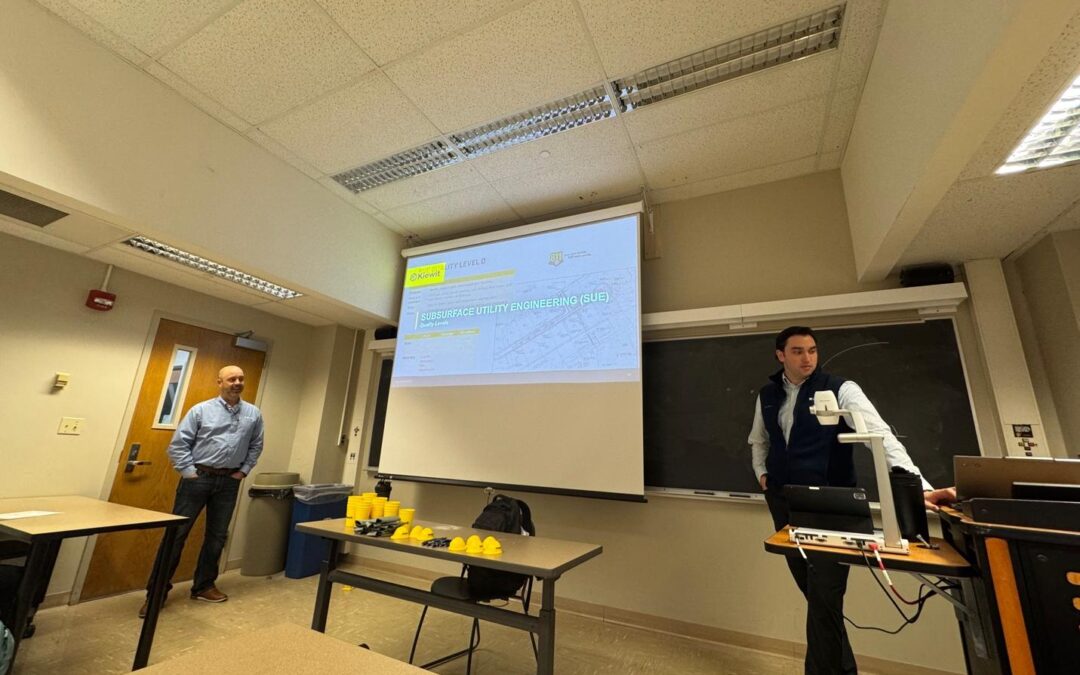
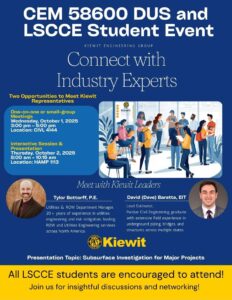
At Purdue University’s Developing Underground Space course, two distinguished experts from Kiewit Engineering Group—Tylor Bottorff, P.E. and David (Dave) Baratta, EIT—delivered an engaging lecture. They not only showcased leading practices in Subsurface Utility Engineering (SUE) but also demonstrated, through concrete actions, Kiewit’s commitment to education, the industry, and the development of future leaders.
A Continued Commitment: Supporting UIS
Kiewit’s contributions to SUE go well beyond classroom lectures. For the past three years, the company has provided venues and logistical support for the UESI & BAMI-I Utility Investigation School (UIS), enabling this internationally recognized training program to be delivered without interruption.
UIS combines classroom instruction with hands-on training, preparing participants to apply standards such as ASCE 38-22 and ASCE 75-22 while gaining practical experience with advanced underground utility detection and documentation methods, including electromagnetic locating, ground penetrating radar (single- and multi-channel), magnetometers, and seismic techniques. For the U.S. infrastructure sector—facing mounting pressures for renewal—UIS serves as a critical pipeline for developing talent. Kiewit’s support is more than material; it reflects a corporate philosophy that collaboration between industry and academia is essential to sustainable workforce development.
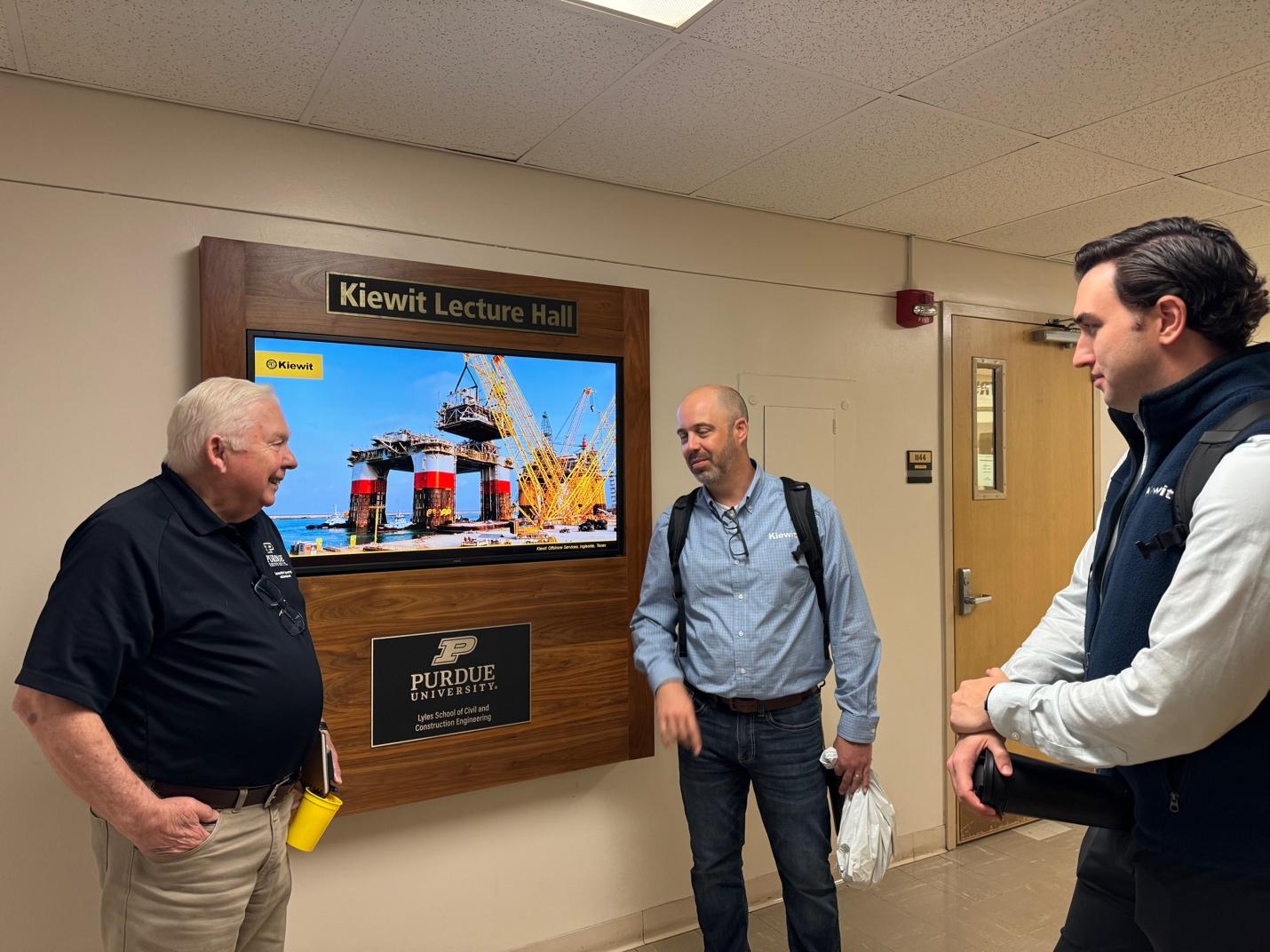
Dr. Tom Iseley with Tylor Bottorff and Dave Baratta at the Kiewit Lecture Hall, Purdue University
Sharing Real-World Lessons in the Classroom
During their Purdue lecture, Tylor and Dave gave students a candid look at real-world project delivery. They explained the different SUE quality levels (from QL-D records to QL-A test holes) and the impact each level has on cost and accuracy.
They also emphasized the central role of risk management. Kiewit uses tools such as the Utility Conflict Matrix to identify and quantify risks, integrating them directly into cost estimates and schedules.This practice minimizes costly surprises during construction and helps projects stay on track.
Both speakers highlighted Kiewit’s philosophy of investing in SUE early. Even before contracts are finalized, the company is willing to fund additional test holes and surveys to reduce uncertainty and provide more accurate bids. This proactive approach builds trust with owners while strengthening competitiveness.
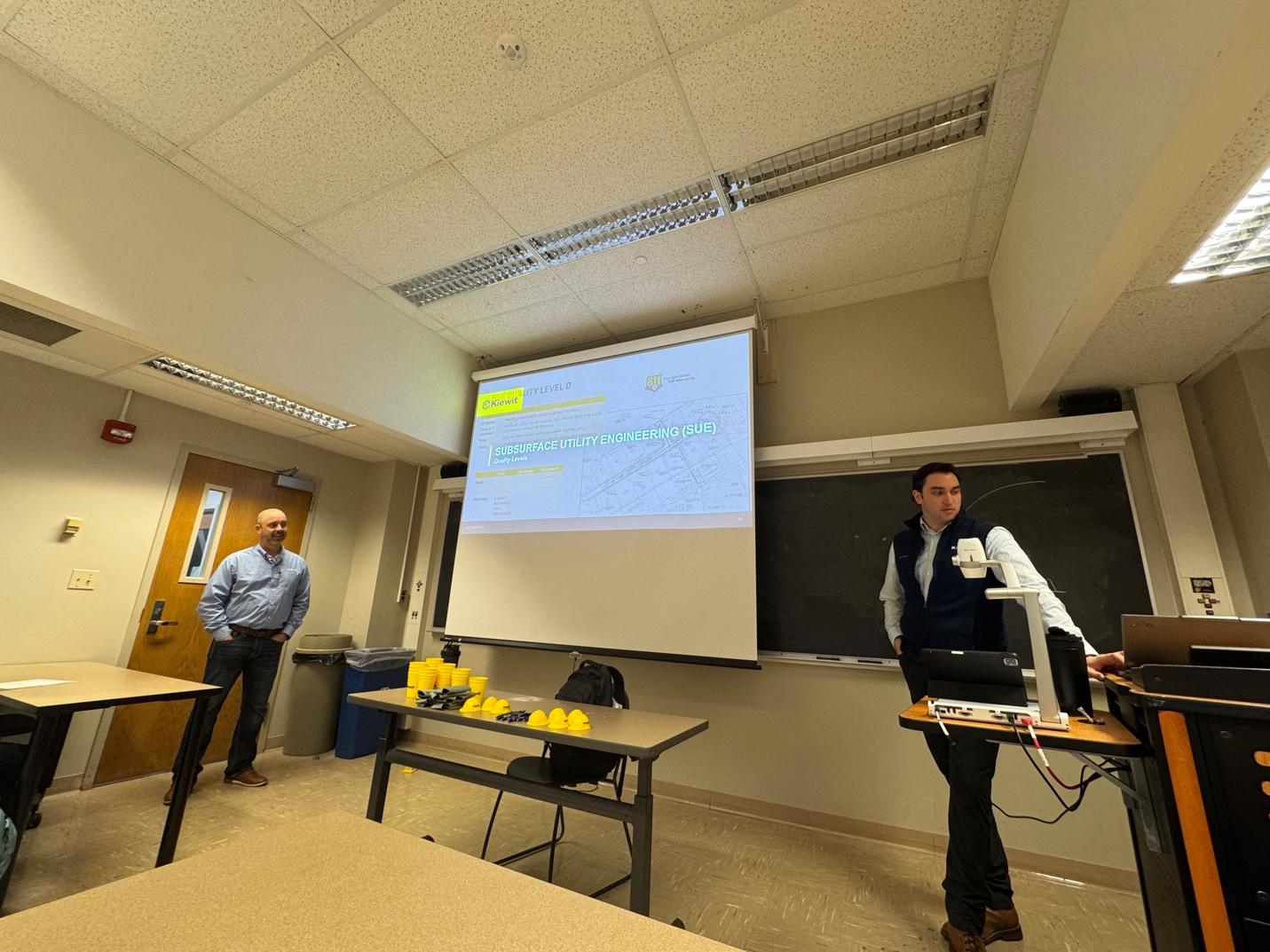
Tylor Bottorff and Dave Baratta delivering a lecture to Purdue students.
Innovation and Data-Driven Practice
In addition to traditional SUE methods, Kiewit is embracing emerging technologies. For instance, they shared how AI-powered contract review tools can automatically analyze thousands of pages of complex documents, assigning clauses to relevant departments and flagging potential risks. This innovation accelerates review processes and allows engineers to focus on critical decision-making.
They also described how AI and satellite imaging can detect roadway “scars” to infer changes in underground utilities—an approach that enhances visibility in utility mapping and supports better project planning.
Direct Engagement with Students
Equally significant is Kiewit’s consistent in-person engagement with Purdue students. For three consecutive years, company representatives have traveled across the country to share experiences face-to-face. This level of commitment goes far beyond corporate branding; it reflects a genuine investment in mentoring and inspiring the next generation of engineers.
They also presented in DUS course, Tylor and Dave answered students’ practical questions on contract clauses, risk-sharing, and project delivery models. They shared stories from major projects where challenges ranged from unexpected geotechnical conditions to archaeological discoveries to safeguarding high-voltage transmission lines. These real-world accounts allowed students to see firsthand how classroom theory translates into field practice. During their time on campus, they engaged directly in Dulcy’s Professional Development course, delivered technical presentations, and held one-on-one and small-group sessions. Students benefitted from frank discussions on real project risks, including geotechnical unknowns, utility relocations, contaminated soils, and even archaeological findings encountered on job sites.
Reflecting on his own career, Dave remarked:
“I started as an intern and field engineer, and today I’m leading estimating and management roles. Along the way, I’ve come to deeply appreciate the importance of SUE. Being able to bring these lessons back to Purdue and share them with students is both a responsibility and a form of giving back.”
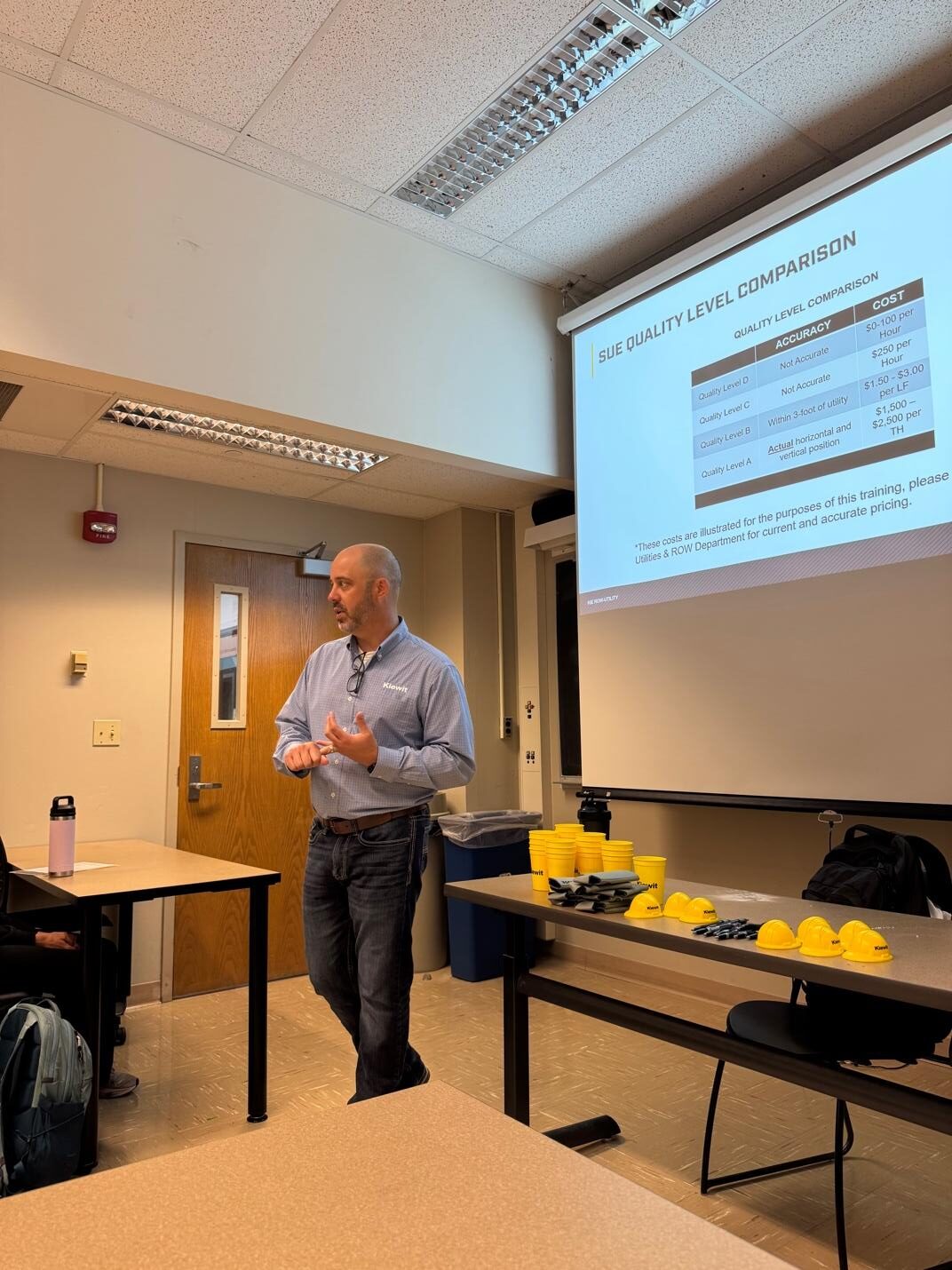
Tylor Bottorff presenting on SUE quality levels.
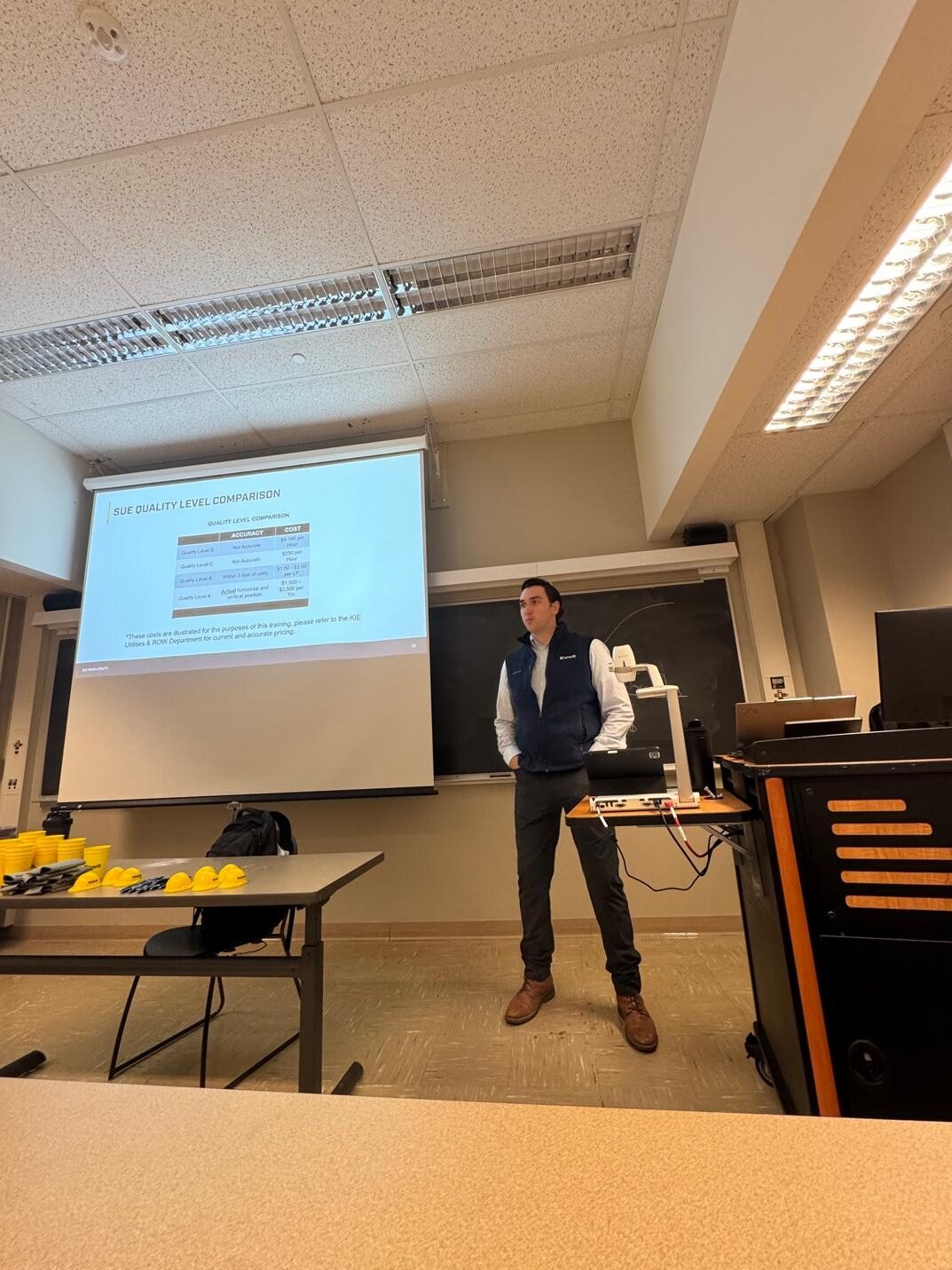
Dave Baratta speaking on SUE applications.
Why Attend UIS?
The lecture also highlighted why SUE expertise is so critical today. More than just a set of tools to avoid accidents, SUE is a foundation for ensuring public safety, managing costs, and increasing the likelihood of project success.
With Kiewit’s support, UIS has grown into a vital platform for skill-building in the U.S. infrastructure sector. The 26th UIS will be held on December 8–12, 2025, at Kiewit’s headquarters in Denver, Colorado. The program offers two tracks:
- Two-Day Course (Dec. 8–9): Focused on managing risks associated with existing underground utilities in infrastructure projects, helping owners, designers, and contractors apply the latest ASCE 38-22 Standard.
- Five-Day Course (Dec. 8–12): A comprehensive curriculum covering underground utility detection and documentation, including electromagnetic locating, single- and multi-channel GPR, magnetometers, seismic methods, and more, aligned with the ASCE 75-22 Standard.
UIS attracts engineers, surveyors, project managers, utility staff, transportation officials, and design professionals. Participants can earn 16 or 40 PDHs under the guidance of leading industry experts. Beyond teaching standards and methods, UIS emphasizes practical demonstrations and hands-on experience, making it a powerful platform for advancing skills, expanding networks, and supporting professional growth.
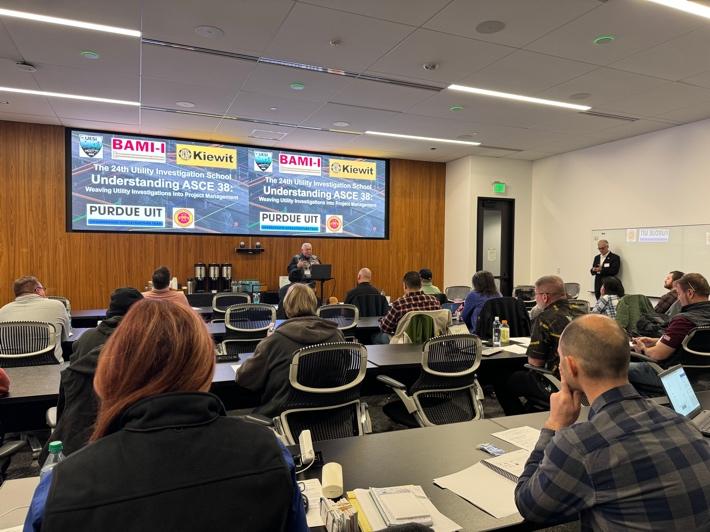
UIS classroom session
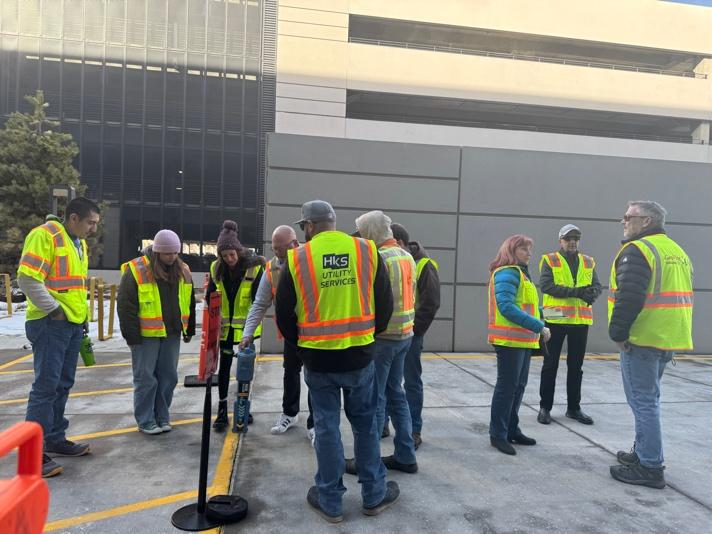
UIS field training exercise
Registration Link: https://bami-i.com/event/26th-utility-investigation-school-2/
Conclusion
Kiewit’s ongoing support for SUE and UIS illustrates how corporate leadership can advance both industry standards and workforce development. The company is not only building bridges, tunnels, and highways—it is also building “invisible bridges” between classrooms and careers, between knowledge and practice.
As Tylor and Dave reminded students, engineering is not only about concrete and steel—it is about people and the future. With UIS as a platform and Kiewit as a steadfast supporter, the path toward safer, more reliable, and more innovative infrastructure is clearer than ever.