While Finland has been featured regularly at the top of international water governance rankings, it still faces severe challenges maintaining its high-quality water and sewer management practices. This article presents experiences from a novel, cost-efficient, and data-driven approach to sewer network asset management.
Water utilities in Finland face a globally common challenge: their sewer networks are aging, but reliable condition data is scarce. Traditional inspection methods such as CCTV provide detailed information but are costly and time-consuming, making it unrealistic to achieve full network coverage. As a result, utilities often operate with incomplete knowledge, leaving them vulnerable to unexpected failures, costly emergency repairs, and inefficient capital spending.
At the same time, water utilities face a growing rehabilitation backlog. Aging parts of networks are often well beyond their intended service life. Utilities must balance the need to renew aging assets with financial pressures and increasing expectations for environmental performance.
Asset management provides a framework for addressing these challenges. Ideally, decisions about rehabilitation and maintenance should be based on accurate data about asset condition and performance. In practice, however, many utilities lack sufficient information. Instead, they rely on assumptions, age-based models, or sporadic inspections. This creates inefficiencies: some pipelines are renewed too early, while others fail unexpectedly, causing environmental damage and costly emergency responses.
Traditional CCTV inspections with crawler cameras have been the main source of condition data. While valuable, these inspections are too expensive and slow to deliver full coverage. In most cases, only a small fraction of the network is inspected in any given year. Utilities therefore face a dilemma: they need better data to manage their networks effectively, but the methods available to collect it are not feasible at scale. The industry needs more cost-effective methods to obtain and manage network condition data so that asset management is more effective.
Traditional Inspection Methods and Their Limitations
Closed-circuit television (CCTV) has been the standard method for sewer condition assessment for decades. Robotic crawler cameras provide detailed, standardized recordings of defects, which can be coded and stored in asset databases. These inspections produce high-quality evidence that supports rehabilitation planning. Their main advantage is the level of detail: structural cracks, joint displacements, infiltration, and operational defects can be clearly documented and archived for comparison over time.
Despite these strengths, CCTV inspections have significant limitations. The first and most obvious is cost. A CCTV inspection requires specialized equipment, trained crews, and often pre-cleaning of the sewer line. This makes it one of the most expensive inspection methods. Because budgets are limited, utilities can only cover a small share of their networks each year. The result is fragmented coverage, with many kilometers left undocumented.
The second limitation is time. Robotic cameras move slowly, typically inspecting a few hundred meters per day. In large networks, full coverage would take decades, if it could be achieved at all. For medium-sized utilities, the resources required are simply not realistic.
A third issue is the way data is generated. CCTV inspections produce long video files and detailed reports that require significant time to review. While the information is precise, it can also be overwhelming, and not all of it is directly useful for decision-making. Asset managers often struggle to convert this volume of data into clear investment priorities.
Finally, because sewers are typically cleaned before inspection, CCTV does not show the network’s true operational state. Sediment build-up, flow restrictions, and minor obstructions are removed before the camera passes through. While this improves visibility, it hides the conditions that customers and operators experience during normal operation.
Taken together, these limitations mean that traditional methods cannot deliver the broad and timely knowledge that utilities require for modern asset management. The challenge is to find a way of collecting condition data that is affordable, scalable, and operationally meaningful.
A Screening-Based Alternative
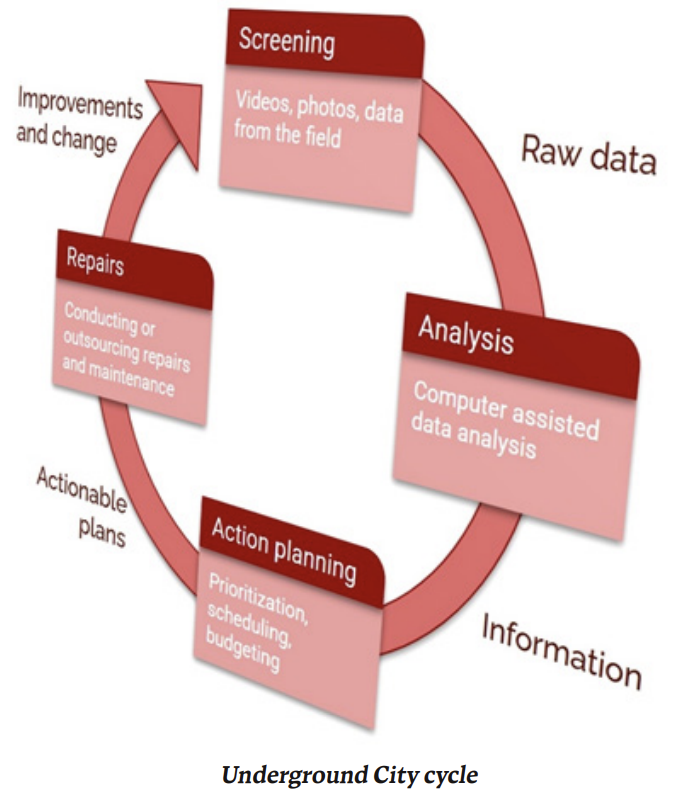
The motivation for developing a new approach is straightforward: utilities need more data, faster, and at lower cost. Complete CCTV coverage is neither realistic nor necessary. Instead, the goal should be to identify which parts of the network are in good condition, which require immediate attention, and which would benefit from more detailed investigation.
The method developed by Underground City rests on four central principles:
- Cost-efficient screening of the network
- Federated management of condition data in a digital platform
- Effective, experience-based analysis of the results
- A focus on actionable rehabilitation and maintenance planning
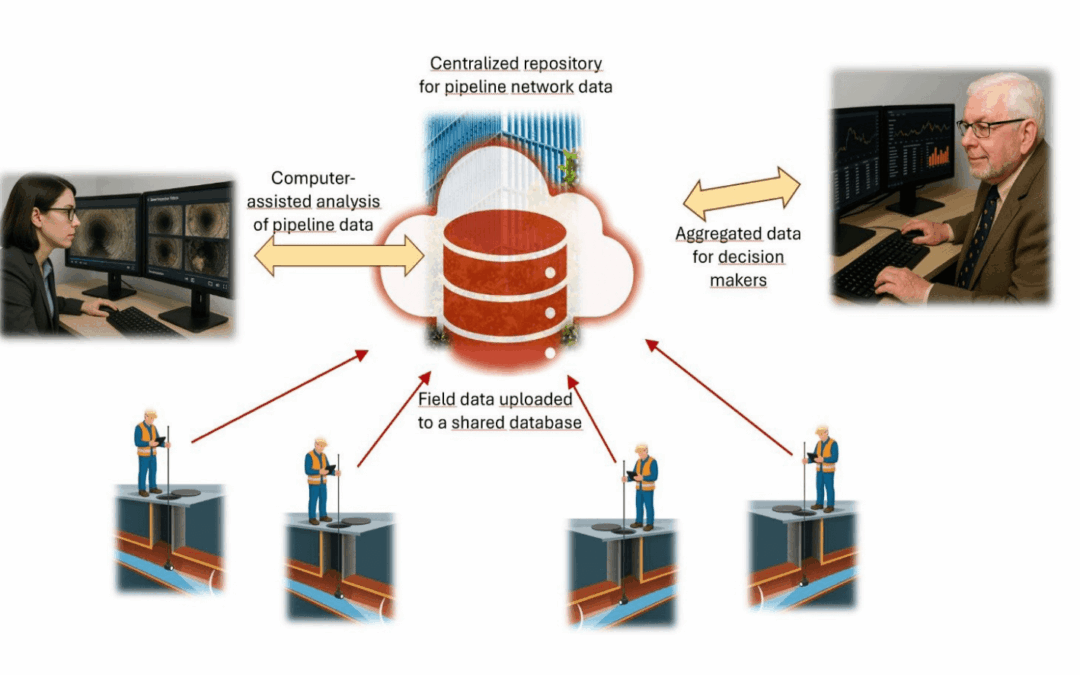
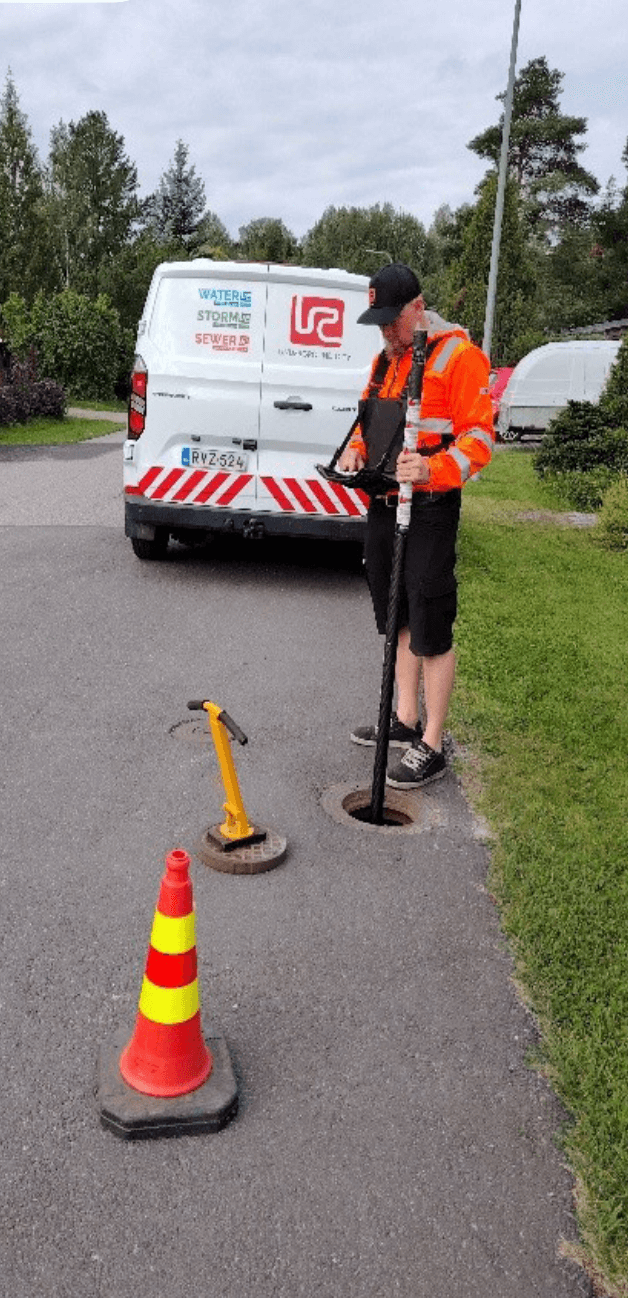
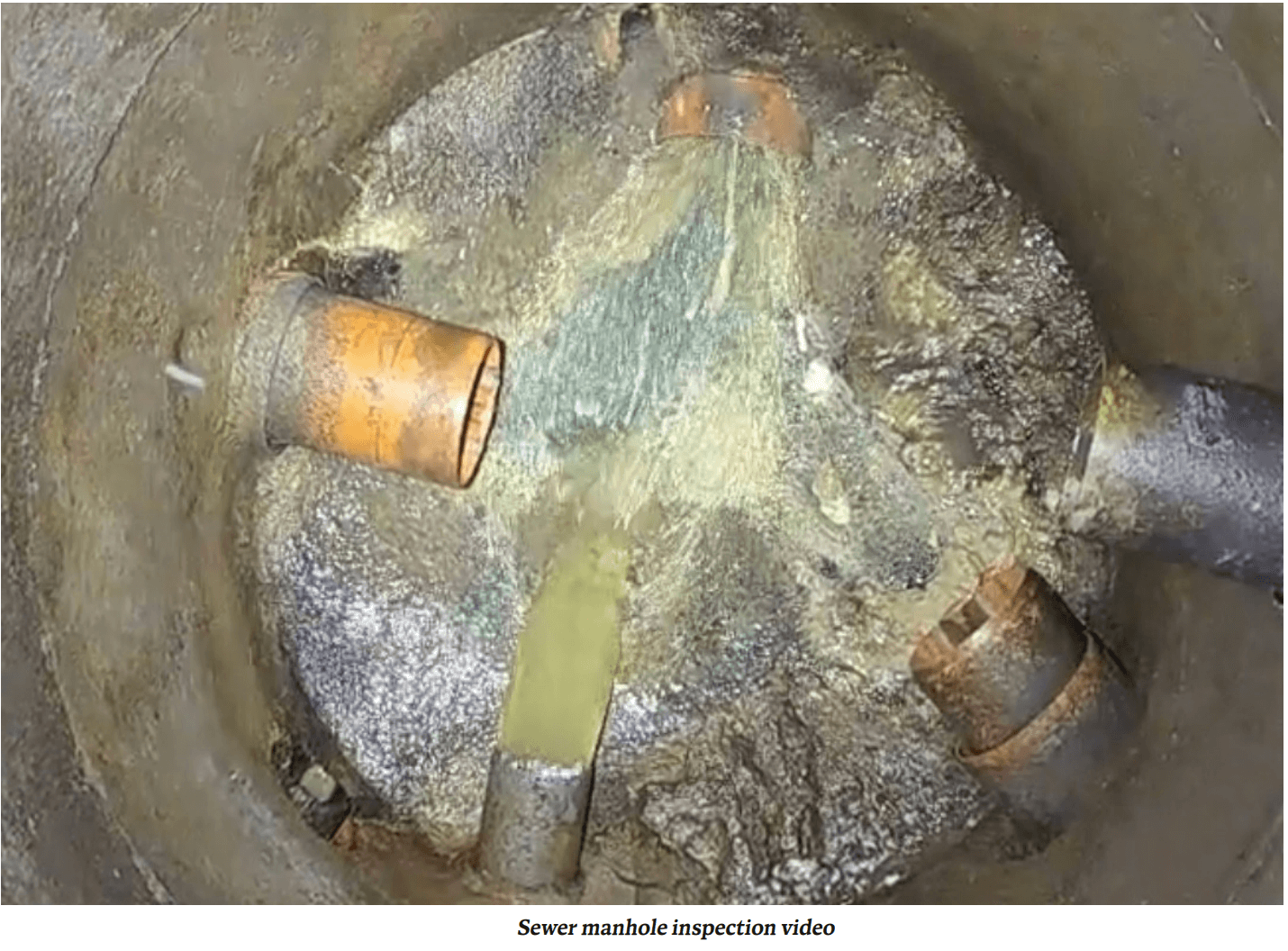
At the heart of the approach is the use of zoom cameras. Instead of inserting crawler cameras into every pipeline, inspections are performed through manholes. The camera is lowered and can record several meters in each direction, capturing the essential condition of the pipeline without the need for cleaning. In parallel, the manholes themselves are screened for structural and operational condition. Together, this provides a broad overview of the system at a fraction of the cost and time required for traditional CCTV. In fact, the screening method based on zoom cameras reduces costs by 80%, based on our experience, yet delivering good enough information for network maintenance.
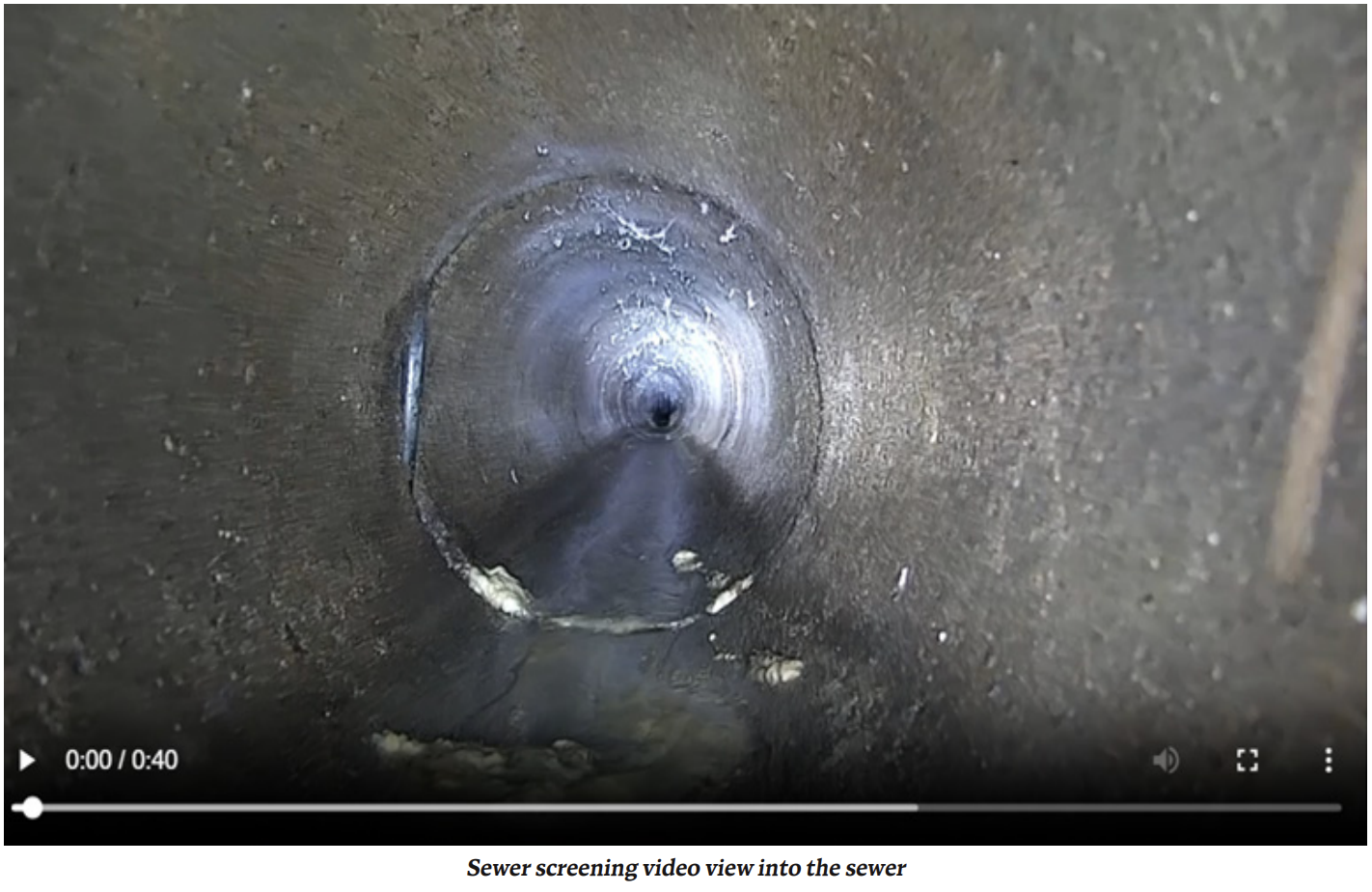
The second element is data management. All inspection material is uploaded into a cloud-based platform, where it is linked to the corresponding assets in the geographic network model. Rather than storing thousands of hours of video, the platform organizes information into concise summaries. Utilities can view network-wide overviews, benchmark conditions across different areas, and generate reports tailored for stakeholders such as municipal decision-makers. This structured management of data ensures that the results are not only collected but also usable.
Analysis is carried out by experienced inspectors, supported by computer-assisted tools that help standardize classifications and highlight anomalies. While artificial intelligence is still in development for this field, semi-automated assistance is already possible and reduces the time required for data interpretation. Importantly, the analysis is focused on outcomes: the aim is not to produce an exhaustive list of defects but to identify the most relevant issues for maintenance and rehabilitation planning.
The final element is the translation of data into action. Based on the screening results, assets are categorized into three groups: those in acceptable condition, those requiring further detailed inspection, and those in urgent need of maintenance or repair. This prioritization allows utilities to focus resources where they are most needed, while gaining confidence that large parts of the network can safely be deferred.
Case Study: Kirkkonummen Vesi
Kirkkonummen Vesi is a medium-sized Finnish water utility responsible for approximately 160 miles (250 kilometers) of sewer network, serving 40,000 residents. Like many utilities, it had previously relied on sporadic CCTV inspections, which provided detailed but limited coverage. This left significant uncertainty about the true condition of the network.
By adopting the screening-based approach in 2024, the utility was able to dramatically expand its knowledge. Within one year, condition data increased fivefold compared to the baseline. More than 2,000 manholes were inspected, many for the first time in a systematic way. Large parts of the pipeline network were screened, revealing both assets in good condition and sections with urgent problems.
The benefits were tangible. Sediment hotspots were identified, allowing targeted cleaning programs that reduced the risk of blockages. Root intrusions and infiltration points were discovered before they developed into serious failures. Several leaks were located and repaired, reducing both environmental risks and unnecessary treatment costs. By acting on these findings, the utility prevented potential sewer failures and improved operational reliability.
Equally important were the improvements in communication. For the first time, decision-makers had access to clear summaries and visual material that illustrated the condition of the network. This transparency strengthened trust and provided a stronger basis for prioritizing investments.
The results are promising. Within one year, Kirkkonummen Vesi increased its knowledge of network condition fivefold, improved transparency for stakeholders, and identified problems that could be addressed before they developed into failures. Most importantly, the utility has established a realistic plan to inspect its entire 160-mile network within three years. In contrast, achieving the same with CCTV alone would take decades and require resources far beyond what the utility could allocate.
“This type of large-scale screening project brings a new level of transparency and control to sewer asset management. We no longer need to guess—we know,” explains Head of Unit Tiia Lampola from Kirkkonummen Vesi.
Asset Management Perspective
The implications of this approach for asset management are significant. Reliable data is the foundation for these decisions. The screening method enables utilities to move from reactive to proactive management. Risks can be identified before they result in failures, and maintenance can be planned based on evidence rather than intuition.
This also represents a shift in investment optimization. Assets in good condition can be safely deferred, avoiding premature renewal. At the same time, critical sections are clearly identified and prioritized for rehabilitation. The result is a more balanced capital program, where resources are allocated according to real needs rather than statistical averages.
Broader Relevance and International Context
While the experience presented here is Finnish, the challenges are not unique. Across the globe, utilities face similar pressures: aging assets, limited budgets, and increasing demands for transparency and environmental responsibility.
The lesson from Finland is that significant improvements are possible within a short timeframe, if utilities are willing to rethink their inspection strategies. By focusing on coverage and efficiency, rather than exhaustive detail in every pipe, utilities can build a foundation for more informed and sustainable asset management.
Conclusions and Future Development
The Finnish experience demonstrates that screening-based sewer inspection is technically feasible, operationally effective, and highly valuable for sewer network asset management. Within one year, knowledge of network condition can increase fivefold. A full network overview becomes realistic within a four-year timeframe, something that would be unattainable with traditional methods alone.
This represents a shift from reactive, assumption-based management towards proactive, data-driven decision-making. Ultimately, the goal is simply to inspect 100% of sewer network to create a sustainable foundation for long-term asset management.
Author
 SAKARI KUIKKA
Over 40 years of experience in sewer network inspection and condition assessment. Pioneer in developing new inspection technologies, including DigiSewer® and CASI methods. Active in European standardization, international training, and collaboration projects; recipient of the FiSTT Award 2022.