Henry B. Gonzalez Convention Center, San Antonio, TX • January 26, 2026
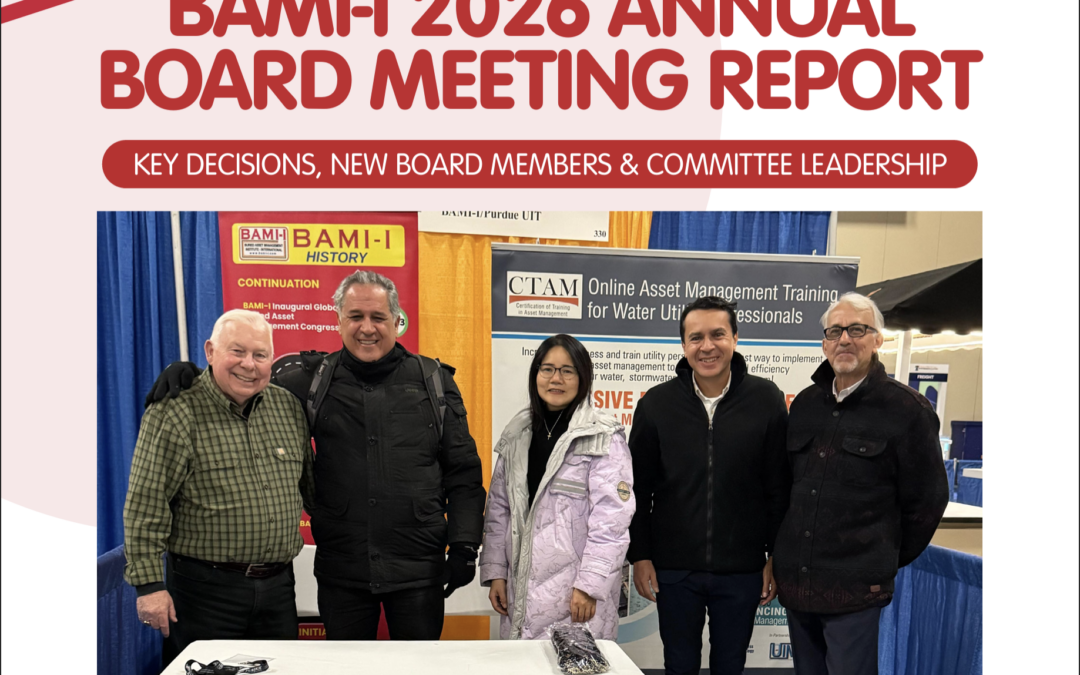
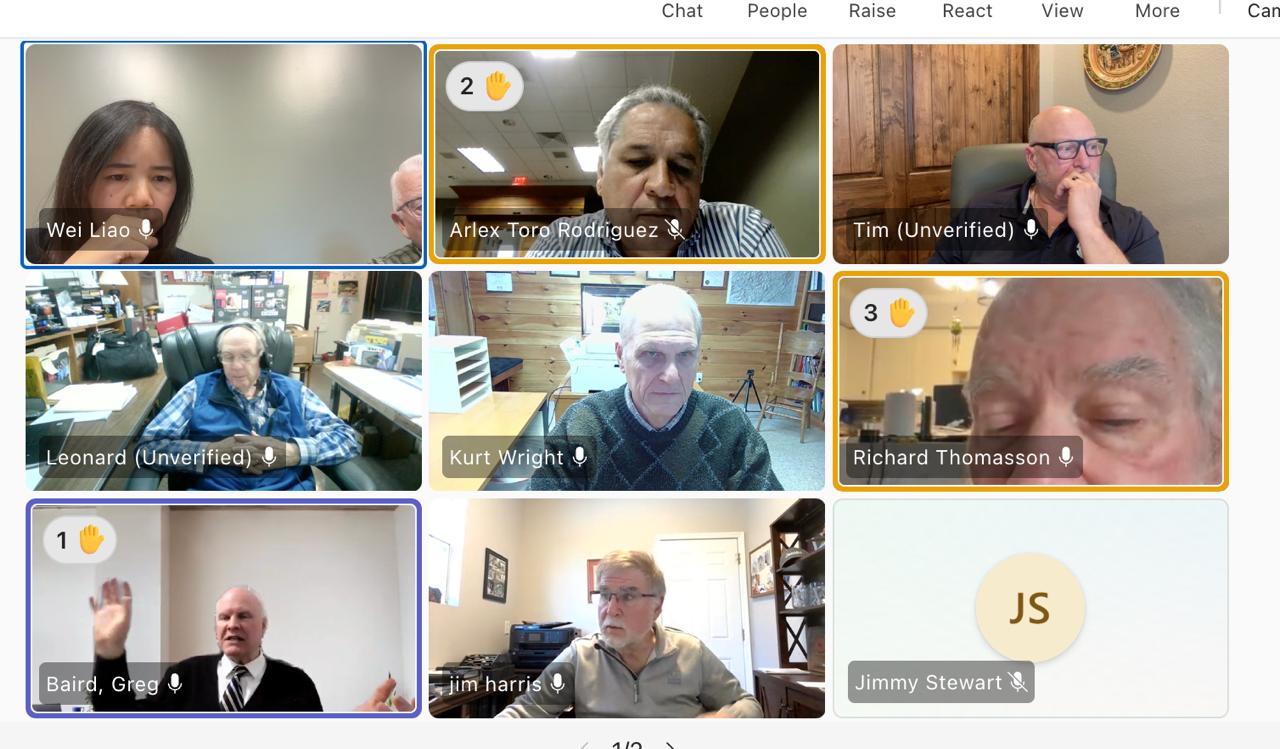
The Buried Asset Management Institute – International (BAMI-I) held its 2026 Annual Board of Directors and General Membership Meeting on January 26, 2026, at the Henry B. Gonzalez Convention Center in San Antonio, Texas, in conjunction with the 27th Utility Investigation School (UIS). BAMI-I extends its sincere appreciation to Underground Infrastructure Conference for its generous support in providing classroom facilities and complimentary registrations, which contributed significantly to the success of the BAMI-I BOD meeting and 27th UIS. With 15 members in attendance both in-person and virtually, the meeting covered governance matters, program updates, strategic priorities, and organizational restructuring. This article summarizes the major outcomes and announcements from the meeting.
Key Announcements & Decisions
2026–27 Officers Elected
All officer positions were filled by unanimous consent. Dr. Tom Iseley was re-elected as Chairman of the Board, Richard Thompson as Vice Chairman, Leonard Ingram as Treasurer, and Greg Jefferis as Secretary.
The board was strengthened with the addition of new members, bringing renewed energy and diverse perspectives to BAMI-I’s mission and programs. Four new board members were formally installed and welcomed:
Tim Back
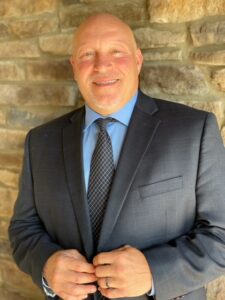
Principal Engineer, Back Municipal Consulting & Owner, BMC Trenchless
Tim Back brings 33 years of hands-on experience in the wastewater industry to the BAMI-I Board. He has extensive experience with construction management, inspection and testing of trenchless projects. He is a member of NASTT, ASCE, AWWA, WEF Collection System Committee, an officer for ASTM F17.67 subcommittee and the chair of the ASCE PINS Committee.
Through BMC Trenchless, Tim provides educational materials and webinars on industry topics, operating a platform that has become a trusted resource for utilities, engineers, and contractors. With over 100,000 contacts in his professional database, Tim brings not only technical knowledge but also an extraordinary network and proven marketing infrastructure that will be invaluable as BAMI-I scales its CTAM program nationwide.
Mustafa Kilic

Civil & Geological Engineering Professional
Mustafa Kilic is a civil and geological engineering professional specializing in geotechnical engineering and buried asset management. He holds an M.S. in Civil Engineering from Purdue University and has international experience in seismic risk studies and water master planning. He contributed to the Switz City project and led ADA compliance efforts for BAMI-I publications. He is an Associate Water Asset Manager (AWAM).
Alberto Florez
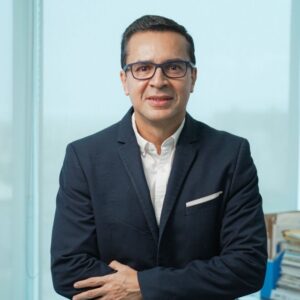
Mechanical Engineer & Director of Communications, LAMS
Alberto Florez, Mechanical Engineer and Director of Communications for LAMS, brings 22 years of underground utility mapping experience. He led the launch of the Latin American Trenchless Technology Magazine and supports cross-regional collaboration between North and Latin America.
Chuck Burtron

Director of Organizational Excellence, Waggoner Engineering
Chuck Burtron joins the BAMI-I Board bringing leadership and organizational management expertise from his role at Waggoner Engineering, a multidisciplinary firm with deep roots in infrastructure planning, design, and program management across the southeastern United States.
As Director of Organizational Excellence, Chuck is responsible for driving process improvement, strategic alignment, and operational performance — skills that translate directly to the asset management discipline, where organizational capacity and systematic planning are essential to long-term infrastructure sustainability. His expertise will be particularly valuable as BAMI-I works to scale its CTAM program and build sustainable partnerships with state agencies.
CTAM Program Restructuring Update
Jim Harris, chair of the CTAM upgrade committee, presented the most significant overhaul of the CTAM certification program since its inception in 2010. Draft content has been completed for all four course levels, and the restructuring introduces several transformative changes:
CTAM 100 is now a four-hour introductory course designed to build foundational awareness of asset management principles, with plans to develop a low-cost e-learning version.
CTAM 200 & 300 now include dedicated modules for both gravity and pressure pipelines — a major expansion from the previous gravity-only focus. These courses will be offered as a sequential two-day program, available both in-person and as live virtual sessions.
CTAM 400 has been redesigned as a four-hour executive-level course focused on rate structures, financial sustainability, and internal funding strategies. Completion of CTAM 200 and 300 is no longer required.
Overlap and redundancy between courses has been eliminated, and the entire program is being formatted into a cohesive presentation package.
Course overlap has been eliminated, and the program is being standardized into a unified presentation format. To support scaling to 20–30 offerings annually, the board discussed establishing a formal train-the-trainer certification pathway. A new Promotion & Marketing Committee was created to support national expansion.
Indiana Water Innovation and Infrastructure Center
Dr. Iseley reported significant progress toward establishing a state-level Water Innovation and Infrastructure Center, a joint initiative between BAMI-I and World Trade Indianapolis. The proposed center would serve as the coordinating body for water utility asset management across Indiana, supporting the implementation of recent state legislation that requires all water utilities to develop and certify asset management plans on a four-year cycle.
Switz City Project Completion
The Switz City Asset Management Plan project — a landmark initiative that helped a small Indiana utility serving 870 residents confront a 78.6% water loss rate — was reported as substantially complete. Funded in part through an IFA (Indiana Finance Authority) grant, the project has been documented extensively in the BAMI-I Journal and serves as a proof-of-concept for the statewide expansion model now being proposed through the Water Innovation Center.
Latin American Expansion & LAMS Partnership
Arlex Toro, Executive Director of the Latin American Society for Trenchless Technology (LAMS), and Alberto Florez presented updates on expanding BAMI-I’s reach across Latin America. LAMS now represents 16 countries and has certified approximately 800 NASCO inspectors over 12 years. The society has launched the second version of its Data Mapping course aligned with BAMI-I and ASCE UESI standards, and Alberto debuted the first-ever Latin American Trenchless Technology Magazine — a digital publication covering 15 countries. Arlex also highlighted demand from Uruguay and Peru for risk-based asset management training, and proposed leveraging BAMI-I’s affiliation with the International Society for Trenchless Technology (ISTT) to expand CTAM courses globally. The board expressed strong support for these international initiatives and established the International Committee to coordinate this work.
UIS Expansion
The 27th Utility Investigation School, held in conjunction with the board meeting in San Antonio, underscored the growing industry recognition and strategic importance of UIS within the underground infrastructure sector. Grounded in the technical framework of ASCE 38 and ASCE 75 standards, the program continues to strengthen its role in advancing best practices, risk reduction, and professional competency in utility investigation. In response to sustained demand and increasing professional engagement, the UIS model is being evaluated for expansion to four or five recurring sessions annually at established locations to better serve the industry’s evolving needs.
BAMI-I Journal: Continued Publication & New Direction
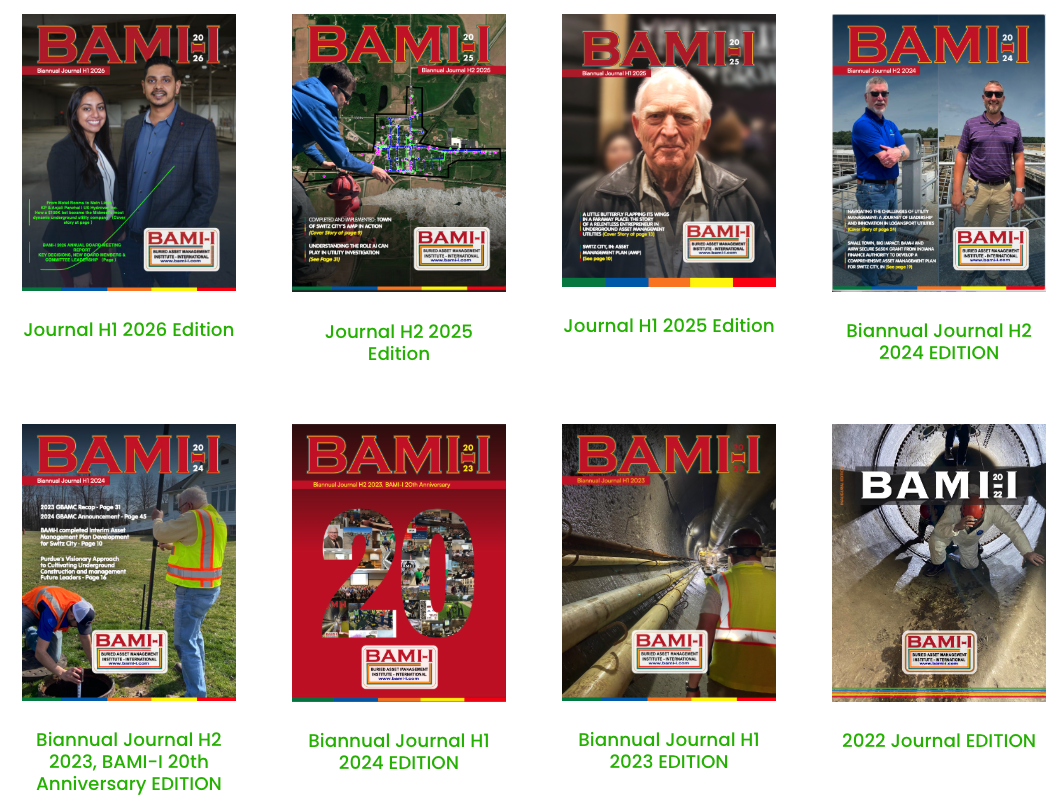
The Board reaffirmed the BAMI-I Journal as a flagship member benefit and a strategic industry platform. Since its launch, seven issues have been published featuring technical innovations, project case studies, policy developments, and BAMI-I initiatives, including a comprehensive report on the Switz City Asset Management Plan.
Published twice annually in print, the Journal serves as a high-quality archival publication distributed to industry leaders and infrastructure decision-makers. To expand reach, BAMI-I is increasing its digital presence through periodic online feature articles highlighting advanced technologies, innovative projects, and influential professionals.
In collaboration with the Latin American Society for Trenchless Technology (LAMS), which publishes across 15 countries, BAMI-I is exploring cross-publication of selected articles in Spanish to extend visibility throughout the Americas. This integrated print–digital strategy enhances exposure for contributors and advertisers while maintaining the credibility of a formal industry publication.
BAMI-I Committee Leadership
The board reviewed and reorganized BAMI-I’s committee structure, appointing new chairs, establishing two new committees, and reaffirming its commitment to focusing energy on committees with active, passionate leadership.
| Committee | Chair | Note |
| Education & Research | Jim Harris | New chair |
| Pipeline Condition Assessment | Smith Rangel | New appointment |
| Utility Investigation | Alberto Florez | New chair; leading UI 2.0 |
| Financial Management | Greg Baird | New chair,Extensive multi-state AMP experience; emphasis on financial sustainability. |
| Trenchless Technology | Mark Wade | |
| TT – Renewable Energy | Kent Weisenberg |
|
| Promotion & Marketing NEW | Jimmy Stewart | Supported by Jim Harris, Tim Back, Greg Baird |
| International NEW | Smith Rangel | oversee International ambassadors program |
| Oil & Gas | — | Currently inactive |
Looking Ahead: Three Strategic Priorities for 2026
The board identified three strategic priorities that will define BAMI-I’s direction in the coming year:
- Launch the restructured CTAM certification platform with updated courses, virtual delivery options, a train-the-trainer pipeline, and dedicated marketing to drive enrollment nationwide.
- Expand the Utility Investigation School program to four or five sessions per year at recurring locations, strengthening this proven revenue source and extending its reach to more owners and engineers.
- Establish the Indiana Water Infrastructure Innovation Center with potential state funding, positioning Indiana as a national model and BAMI-I as the coordinating body for water utility asset management statewide.
BAMI-I extends its sincere thanks to all board members, both returning and new, for their dedication and service. With an expanded and energized board, active committee leadership, a restructured CTAM program, and growing international partnerships, the organization enters 2026 better equipped than ever to lead the advancement of buried asset management practices — in Indiana, across the United States, and around the world.