A Story of Infrastructure, Governance, and Institutional Persistence
By Charles Burtron & Tom Iseley
Indiana’s water and wastewater infrastructure faces the same slow crisis unfolding across the United States: aging systems, deferred maintenance, and a replacement rate that cannot keep pace with deterioration. But Indiana chose a distinctive path. Rather than simply mandating asset management through legislation, the state authorized the creation of a permanent institutional center—the Indiana Water Innovation and Infrastructure Center (IN-WIIC)—to make that mandate achievable, consistent, and durable. This article traces the story of how that decision came to be, and what it means for utilities, vendors, contractors, and visionaries across the industry.
1. The Problem That Wouldn’t Go Away
This story didn’t start with a new idea. It started with a problem that wouldn’t go away. By 2015, the Indiana Finance Authority (IFA) had completed an evaluation of water utility planning across the state, and the findings confirmed what many already suspected: Indiana’s water and wastewater infrastructure was aging faster than it was being replaced.
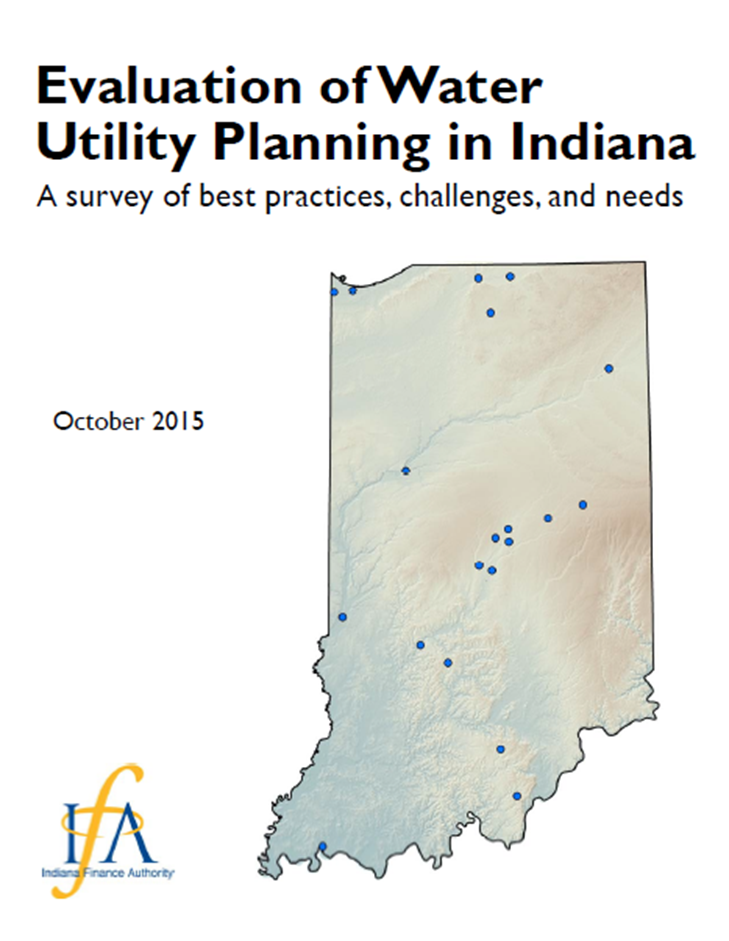
2015 IFA Evaluation of Water Utility Planning
The replacement rates were well below sustainable levels. Utilities were managing rates year to year, focused on keeping water flowing today rather than planning for the systems of tomorrow. Long-term planning existed on paper, but not in practice. The gap between what the infrastructure needed and what was being invested was growing wider every year. No single institution had the authority or the mandate to close it.
| Everyone could see the gap growing. Rates were being managed year-to-year. Long-term planning existed on paper, but not in practice. No one thought the system was sustainable, but no one actor had the authority to fix it alone. |
|---|
2. Everyone Was Doing Their Job
What made this problem especially difficult was that no one was failing at their job. Regulators were protecting affordability. Utility leaders were keeping water systems operational. Legislators were exercising due diligence, asking for data before making commitments. Vendors and contractors were responding to projects as they were scoped and funded. Everyone was behaving rationally within their institutional mandates.
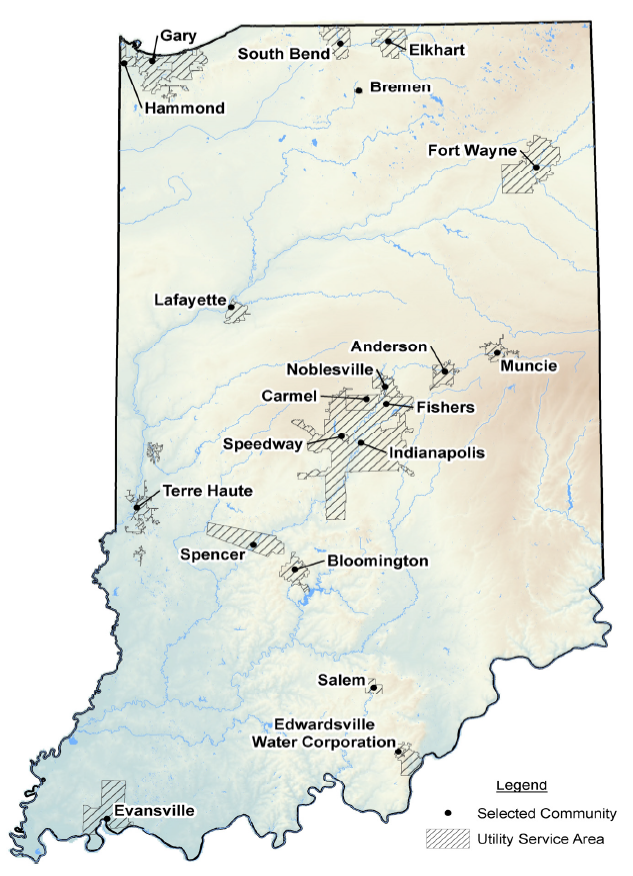
Locations of Selected Communities and Associated Utility Service Areas in Indiana.
The problem was that the mandates didn’t align. The system incentivized short-term decisions—affordable rates now, deferred maintenance later—even when every participant understood the long-term consequences. Fragmented responsibility across institutions meant that rational individual decisions were collectively producing unsustainable outcomes. No single actor could break the cycle alone, because no single actor owned the whole problem.
3. Indiana Changed the Rules
That is when Indiana made a decision that changed the direction of the conversation. The state didn’t mandate specific projects or technologies. It mandated planning. With the passage of SEA 272 in 2022, asset management became a statutory requirement for water utilities. The legislation established that utilities seeking access to State Revolving Fund (SRF) dollars had to demonstrate that they understood what assets they owned, what condition those assets were in, what level of service they owed their customers, and how they planned to pay for maintenance and replacement over time.
This was a fundamental shift: from voluntary guidance to required planning. Asset management was no longer an industry best practice to be adopted at each utility’s discretion. It was now tied directly to the funding mechanisms that utilities depended on. Then, in 2025, HEA 1459 expanded that statutory authority further, authorizing the establishment of a statewide center to support the mandate with institutional infrastructure.
| The state didn’t mandate projects or technologies. It mandated planning. If a utility wanted access to SRF dollars, it had to demonstrate that it understood what it owned, what condition it was in, what level of service it owed, and how it planned to pay for it. |
|---|
4. A New Requirement, Old Constraints
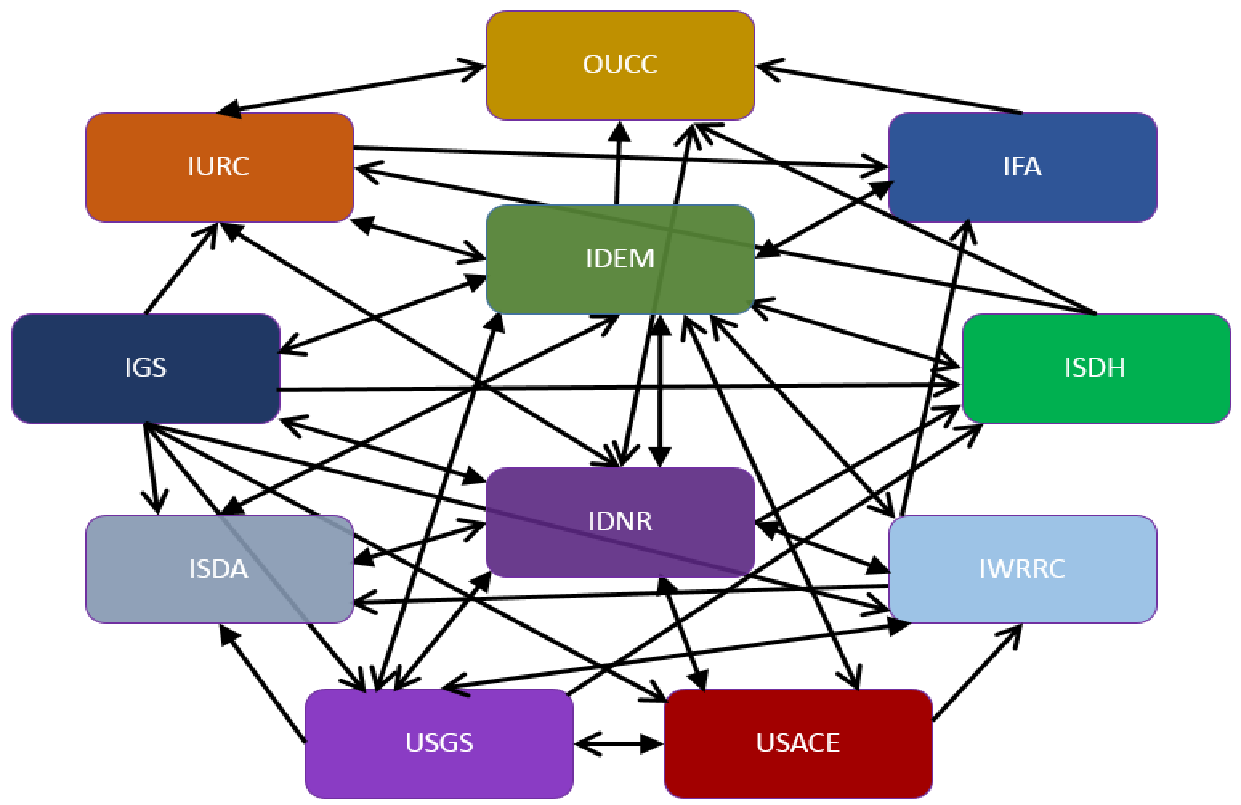
Inter-agency Complexity and Operational Constraints in Infrastructure Compliance
For utility leaders, the new requirement landed with mixed emotions. On one hand, it validated what many had been saying for years: that long-term planning was necessary and that the status quo was unsustainable. On the other hand, it raised an urgent practical question—how do you comply meaningfully when you are already stretched thin?
The burden fell disproportionately on small and mid-sized utilities, which often lacked the staff, data, and technical capacity to develop asset management programs from scratch. There was a real risk that compliance would become “paper compliance”—checking boxes without changing behavior or improving outcomes. For vendors and contractors, the mandate signaled a coming shift in how projects would be defined and funded, but the market was not yet organized around it. The rules had changed, but the support systems had not.
5. The State Knew the Risk
The state understood that risk. A law without institutional support turns into paperwork. Mandates alone do not build capacity, and compliance without understanding does not produce better infrastructure. That is why the legislative authorization did not stop at requiring asset management.
It also authorized the creation of something new: a statewide center whose purpose was not to regulate, not to sell, and not to replace local responsibility, but to make asset management achievable, consistent, and durable across Indiana. The legislature recognized that consistency, continuity, and institutional neutrality were essential. Asset management needed to be framed not as a one-time regulatory burden, but as governance infrastructure—something that would outlast any single election cycle, funding round, or administrative turnover.
6. IN-WIIC Comes Into Being
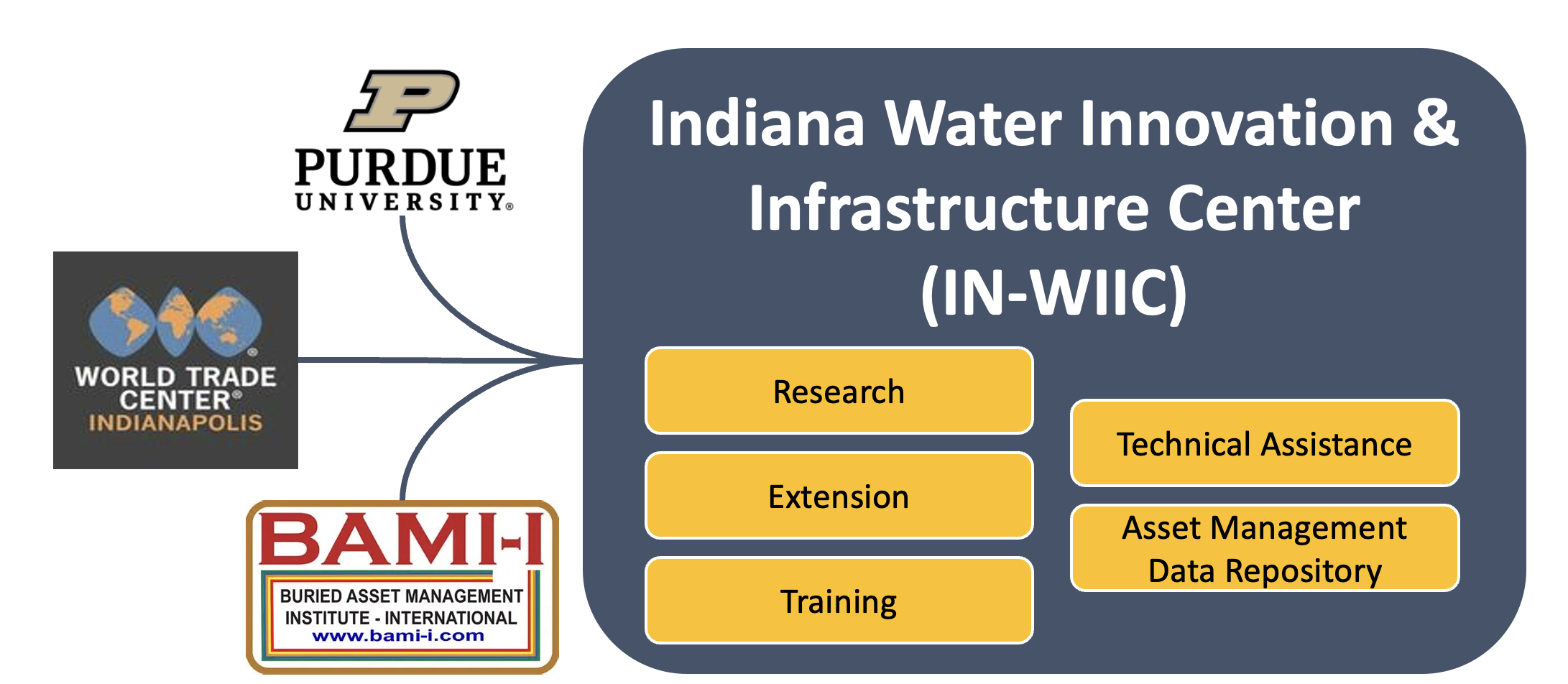
Organizational Framework and Core Service Pillars of IN-WIIC
That is how the Indiana Water Innovation and Infrastructure Center—IN-WIIC—came to be. Built as a partnership between Purdue University, BAMI-I (the Buried Asset Management Institute—International), and the World Trade Center- Indianapolis (WTC-Indy), IN-WIIC was designed as shared infrastructure for governance.
Its functions span five core areas: research, to advance the knowledge base for asset management practices; extension, to translate that knowledge into practical tools and methods for utilities across the state; training, to build human capacity at all levels; technical assistance, to provide hands-on support for utilities developing their programs; and a central data repository, to house asset management data and guidance in a consistent, accessible format.
IN-WIIC doesn’t solve problems for anyone. It makes it possible for people to solve their own problems without working in isolation. It ensures that a utility in a rural county and a utility in a metro area are working from the same standards, the same language, and the same institutional memory.
7. What This Means for the Industry
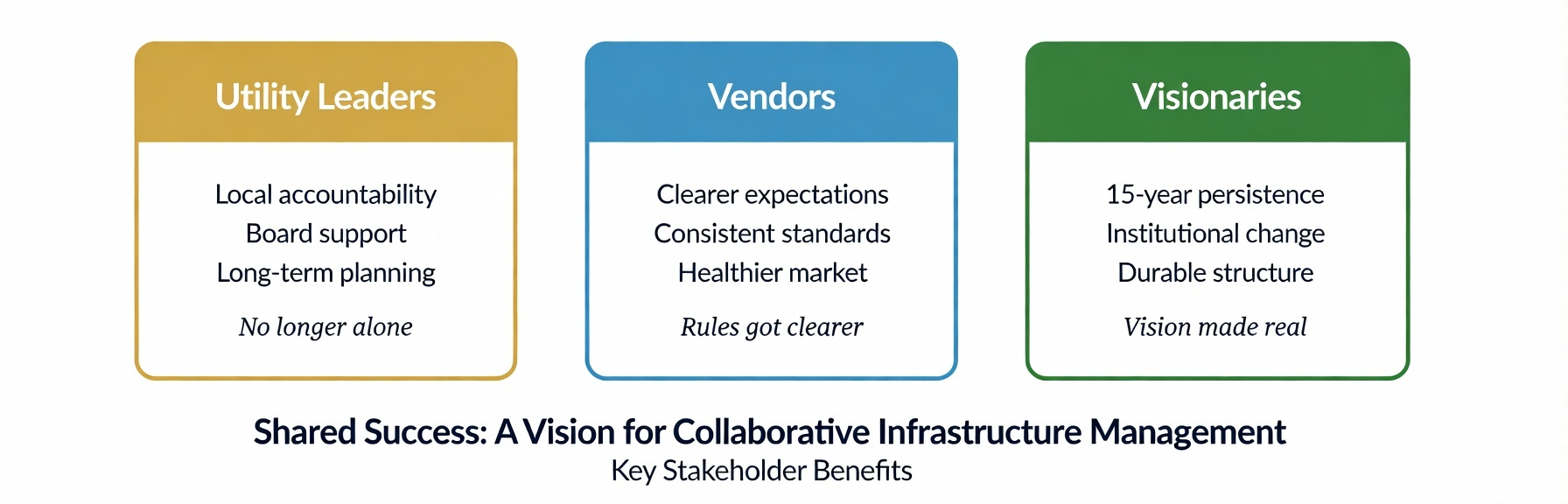
For Utility Leaders: The point of this story is not that IN-WIIC will fix your system. It will not. The point is that it gives you the support to do the right work, with better information, clearer expectations, and a longer time horizon. Accountability remains local—you still answer to your board, your council, and your ratepayers—but you are no longer making those arguments alone. IN-WIIC helps turn long-term thinking into something practical rather than aspirational, and provides defensibility for decisions that may not pay off for years.
For Vendors and Contractors: The point is not that the rules got tighter. It is that they got clearer. IN-WIIC helps align planning, funding, and delivery so that good solutions have a fair chance to succeed. When utilities plan consistently and define projects upstream, the result is a healthier, more predictable market—one where performance is judged against shared standards rather than shifting interpretations. That is how better projects, better outcomes, and more stable business environments emerge over time.
For Visionaries: Indiana proves something that many assume is impossible. This initiative did not start with a movement or a broad coalition. It started with one person who carried the idea forward for fifteen years—through studies, legislation, partnerships, and persistence. IN-WIIC exists because someone refused to let go of the vision, even when the timeline stretched far beyond what most would tolerate. Institutional change can start with one person, if that person is willing to stay with it.
8. The Resolution
What Indiana ultimately resolved was not a technical problem but a governance problem. The state now has a place where long-term infrastructure thinking can live—between election cycles, between funding rounds, and between individual careers.
IN-WIIC exists so that asset management is no longer a special initiative or a one-time requirement, but a normal part of how water systems are planned, discussed, and defended. It does not replace local leadership, regulators, or the market. It connects them. And as long as Indiana cares about affordability, reliability, and public health, there will be a role for an institution whose only job is to keep the long view in focus.
| IN-WIIC exists so asset management is no longer a special initiative or a one-time requirement, but a normal part of how water systems are planned, discussed, and defended. It doesn’t replace local leadership, regulators, or the market. It connects them. |
|---|
About the Authors
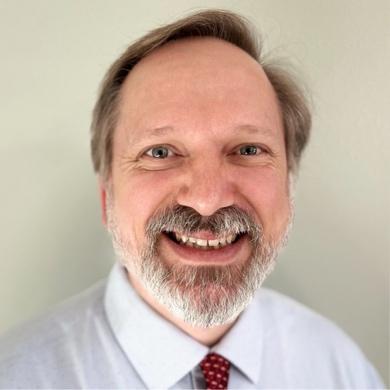
Charles Burtron
Burtron is Director of Organizational Excellence at Waggoner Engineering, a multidisciplinary firm with deep roots in infrastructure planning, design, and program management across the southeastern United States. He serves on the Board of BAMI-I (Buried Asset Management Institute—International), bringing leadership and organizational management expertise to the asset management discipline.

Tom Iseley
Tom Iseley, Ph.D., P.E., Dist. M. ASCE, PWAM, is a Distinguished Professor at Purdue University’s Lyles School of Civil and Construction Engineering and Chairman of the Board of BAMI-I (Buried Asset Management Institute—International). He has spent over two decades advancing underground infrastructure asset management through research, education, and legislative engagement.
Contact: [email protected]