By Mark Grabowski
A distinguished hub for both community and tourism, Arlington, located a mere five miles from the nation’s capital, stands as the smallest self-governing county in the United States, encompassing an area of nearly 26 square miles. Boasting a remarkable array of crucial American governmental, educational, and technological infrastructures, Arlington serves as home to prominent landmarks like the Pentagon, Reagan National Airport, Arlington Cemetery, and esteemed academic institutions such as Marymount University, as well as satellite campuses of Virginia Tech and the University of Virginia. Furthermore, it proudly hosts industrial giants Boeing and Raytheon, along with Amazon’s upcoming secondary headquarters.
Arlington’s “Smart Growth” and Trenchless Strategy
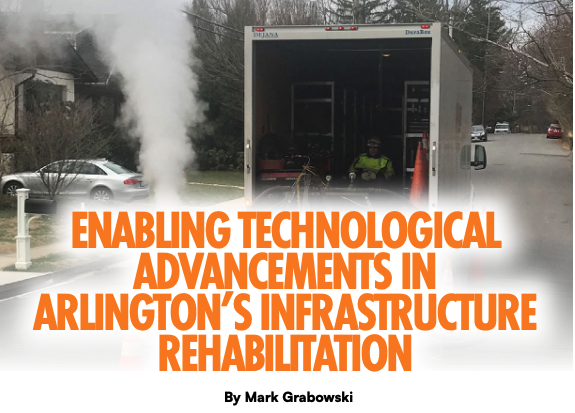
As a leading proponent of the “Smart Growth” movement, Arlington has embraced sustainable practices and transit-oriented development, catering to its population of 233,000 residents. Ensuring the longevity of its aging sanitary sewer infrastructure without causing significant disruptions remains a paramount objective for the County. Employing advanced trenchless technologies like cured-in-place rehabilitation (CIPP) instead of traditional dig-and-replace methods, Arlington effectively curtails traffic congestion, safeguards historical landscapes, and maintains exceptional walkability, all in alignment with the goals of “Smart Growth” cities.
The Software Trio: Esri, Cartegraph, and ITpipes
Handling the vast network of sewer assets, extending over 465 miles of pipeline, and carrying out annual relining of approximately 14-17 miles, necessitates a well-orchestrated approach. The County’s dedicated workforce invests substantial hours in exhaustive investigations and generates vast terabytes of Closed-Circuit Television (CCTV) condition assessments well before the CIPP boiler trucks arrive. To accomplish their weekly lining target of 2,000 feet, a benchmark that exceeds many other agencies’ annual rehabilitation efforts, Arlington relies on an efficient software trio comprising Esri, Cartegraph, and ITpipes.
For an ongoing project of this magnitude to succeed, flawless coordination of numerous moving parts is essential. With a full-time in-house CIPP contractor, AM-Liner, dedicated solely to the County, and an additional two full-time in-house CCTV inspection crews, alongside an external CCTV contractor, maximizing productivity stands as a critical imperative. The prudent allocation of the annual $3M budget necessitates careful deliberation in the selection of asset management, pipe inspection, and rehabilitation methods. A seamless integration of software is pivotal to this process.
In 2018, Arlington employed Esri ArcGIS and Cartegraph Asset Management System. Seeking pipe inspection software that would seamlessly integrate with their existing infrastructure, the County discovered ITpipes. Built on Esri’s latest technologies and featuring Esri’s Web Maps, ITpipes seamlessly integrates with Cartegraph through automated bi-directional data synchronization. Any data input into ITpipes automatically transfers to Cartegraph and vice versa, streamlining Arlington’s workflow to remarkable efficiency.
A Seamless Inspection Workflow
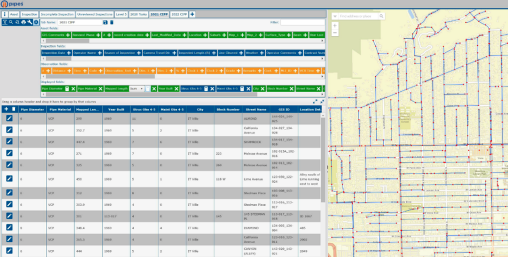
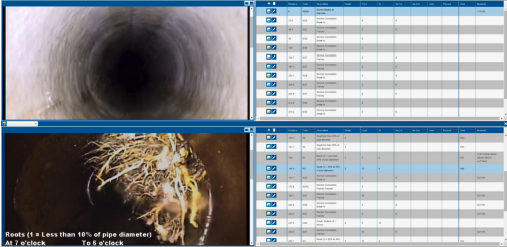
Here’s a glimpse into a typical workflow session: Jeremy Hassan, PE, Chief Operating Engineer of Sewers & Streets, utilizes the Esri ArcGIS map within Cartegraph to select an area in the County and initiate work orders for the assets within that designated area. These work orders are instantly transmitted to the CCTV inspection vehicle’s ITpipes Mobile software. Operators are then provided with a comprehensive view of the assigned pipes, along with their locations on the map, with relevant asset information already populated from GIS and Cartegraph. Following completion, the inspection data is uploaded from the vehicle via hotspot, accessible to all relevant stakeholders on ITpipes Web, and the Cartegraph work order is marked as complete. The ITpipes Web’s SmartTabs further facilitate efficient filtering and selection of pipe inspections that meet Arlington’s specific criteria, creating a separate list for review.
Jeremy Hassan, PE, notes, “We are deeply committed to maintaining our buried assets in Arlington. The new workflow has almost eradicated duplication in inspection efforts and enables us to track pipes requiring follow-up, keeping work orders open until completion. Our previous system lacked cohesion, leading to data collection with no tangible output. Now, once data is collected, it is readily available to all appropriate County personnel, transitioning us from being reactive to becoming predictive.”
Decision-Making and Rehabilitation
Efforts to address identified issues are spearheaded by Jon Lawler, Hisham Wahdan, and Carla Alayon, the dedicated team overseeing ongoing sanitary sewer rehabilitation projects within Arlington.
Hisham Wahdan, Construction Manager at Arlington County, shares their approach, stating, “We assess the filtered pipe assets in the ITpipes Web’s SmartTab and initiate the decision-making process for rehabilitation. Our evaluations consider not only observed defects from the pipe inspections but also factors like age, location, size, and notes from Cartegraph work orders provided by the jetting crews. Based on this information, we determine whether full-length lining or point repair is the appropriate course of action, updating the corresponding SmartTab accordingly.”
Apart from annually rehabilitating 75,000-90,000 feet of 8” – 15” pipes, Arlington embarks on at least one large-diameter lining project each year. In the current year, this undertaking involves a 54” sewer main leading to Arlington National Cemetery, with the section downstream within the Cemetery already having undergone relining.
Diversifying Technologies
Carla Alayon, Maintenance Contracts Supervisor, comments on the rehabilitation approach, stating, “For our sanitary sewer, we primarily employ steam-cured felt CIPP, as it has proven highly effective for us. Our contractor, AM-Liner, consistently delivers exceptional results. However, for stormwater applications, the County is actively exploring UV-cured fiberglass liners, offering diversified rehabilitation options.”
Taking a holistic approach to infrastructure rehabilitation, Arlington addresses manholes as well through a combination of curtain grouting and cementitious and epoxy lining, ensuring comprehensive maintenance.
Jon Lawler, Chief Support Engineer, adds, “Despite our growing population, our plant’s flows are decreasing. While various factors contribute to this trend, our aggressive yet strategic trenchless rehabilitation program significantly contributes to the decline.”
Jeremy Hassan highlights the positive impact on planning and budgeting, stating, “Efficiency in our operations allows us to plan and budget strategically. Data collected in ITpipes and cost estimates from Cartegraph empower us to project financial needs for multiple years. This effective budgeting ensures that rehabilitation remains on schedule and delivers favorable outcomes for our ratepayers.”
Mark Grabowski is the Business Development Manager at ITpipes.