How a young immigrant entrepreneur turned his late father’s life savings into one of the Midwest’s most dynamic underground utility service companies
───────────────────────
US Hydrovac Inc., Indianapolis, Indiana
By Wei Liao
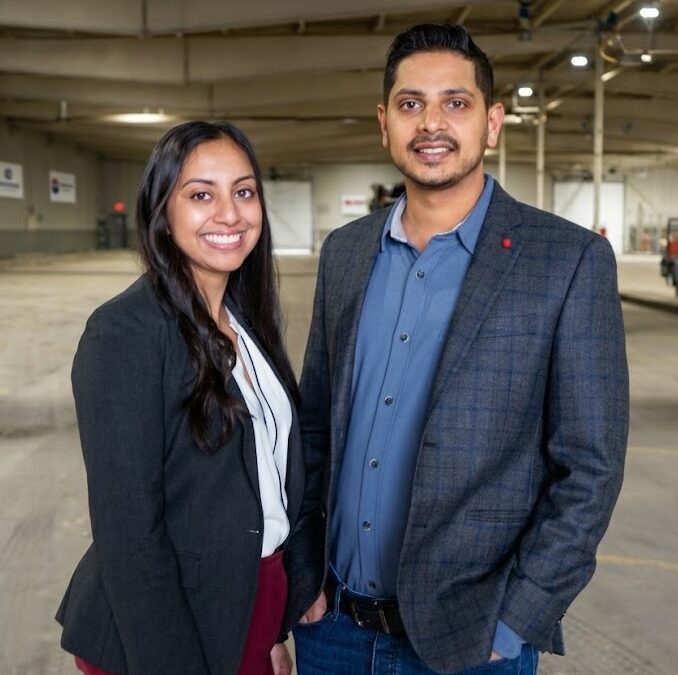
KP Panchal, Founder & Owner, and Anjali Panchal, CFO, of US Hydrovac Inc.
Editor’s Note
When I was reviewing the registration list for the 26th Utility Investigation School (UIS)—a training program organised by BAMI-I at Kiewit Campus in Denver, Colorado —one name caught my attention: KP Panchal, Owner, US Hydrovac Inc. I knew the company well. Over the years, US Hydrovac had generously sponsored BAMI-I student delegations to attend industry events, but I had never met the person behind it. Seeing the founder himself signed up made me eager to finally put a face to the name.
During the school, I had the opportunity to sit down with KP for an extended conversation—and what I heard was one of the most compelling stories I have encountered in two decades in this industry: an immigrant childhood spent cleaning motel rooms across ten states, the devastating loss of his father at 22, the audacity of investing a family’s life savings into an unfamiliar business, and the relentless perseverance that carried him through years of rejection. After the school, KP invited our team to visit US Hydrovac’s Indianapolis operations and subsequently we invited KP and his wife Anjali to speak to students in our Construction Business Management course at Purdue. Watching a room full of graduate students lean in and connect with his story reinforced my conviction that this is a voice our industry needs to hear.
This cover story is my attempt to share that voice more broadly. KP represents a new generation of builder who combines hands-on grit with entrepreneurial vision, who leads with empathy, and who proves that innovation in construction sometimes comes not from technology, but from people brave enough to do things differently. I believe his story can inspire more young professionals to take action and move our industry forward.
— Wei Liao, BAMI-I
◆ ◆ ◆
An Unlikely Beginning
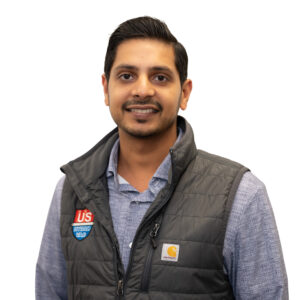
KP was born in India and came to the United States with his family at the age of four. His parents entered the American economy through one of its most unglamorous doorways: the budget motel industry. His mother worked as a maid and front desk clerk. His father maintained the properties and renovated rooms. For young KP, childhood was not defined by play dates and little league, but by paint rollers, drywall mud, and an endless rotation of unfamiliar towns.
“Before I turned 16, we moved across maybe ten different states,” KP recalled during his guest lecture at Purdue University in February 2026. “We cleaned rooms, did maintenance, worked the front desk for other families. At the time, I thought this was a terrible life. I didn’t even have friends.”
But looking back, KP recognizes those formative years as the foundation of everything that followed. His father taught him trade skills out of necessity: painting, drywall installation, wallpapering, tiling, flooring, and eventually basic electrical work. By 16, KP and his father could fully renovate a motel interior—from studs to finish. “I even got shocked once cutting a 12-gauge Romex wire with pliers,” he admitted with a grin. “Nobody told me you weren’t supposed to do that.”
Those skills, hard-won in dusty motel corridors, would prove more valuable than any textbook. They gave KP an intuitive understanding of field work, of the sweat and danger that accompany every project, and of the human dynamics that make or break a crew.
A Father’s Dream, Cut Short
At 22, KP enrolled at IUPUI (Indiana University–Purdue University Indianapolis), determined to build a life beyond the motel circuit. His father, however, needed help on a roofing job in Springfield, Illinois, and urged him to stay. KP refused. “Dad, I can’t work with you forever,” he told him. It was the right decision. It was also the last full conversation they would have.
On the day after his first class, KP received a phone call: his father had fallen from the roof of a three-story hotel. KP drove from Indianapolis to Springfield at speeds that could have ended his own life. “I was going 120 miles an hour,” he said quietly. “I thought, if a cop pulls me over, I’ll just tell him my dad is dying.”
His father spent eight days in the hospital before passing away. KP withdrew from school, buried his father’s ashes in Indiana, and spent months adrift. “I had this person who guided me, told me what to do. I didn’t have that anymore.”
When he eventually returned to school, he encountered Dr. Tom Iseley—a professor whose research on trenchless technology and underground infrastructure would later intersect with KP’s career in ways neither could have predicted. But at the time, KP had a simpler ambition: he wanted to become a general contractor, just like his father.
Learning the Industry, One Job Site at a Time
KP’s first industry job was with Patriot Engineering, earning $13 per hour conducting concrete slump tests across multiple job sites. It was unglamorous work, but it forced him into a daily routine of meeting superintendents, project managers, foremen, and field crews—each with different communication styles and expectations. “I hated it at first. I was uncomfortable,” he admitted. “I felt like a tiny kid trying to talk to these experienced construction workers. But I learned that if you ask questions and come with a learning mindset, people respect you.”
His first internship came at Bulley & Andrews, a major general contractor in Chicago. After graduating, he joined Clayco, another prominent GC, as a project engineer on a large warehouse logistics project. Eventually he moved into the estimating department—an experience he considers among the most formative of his career.
“Estimating taught me how to price work, how to understand cost structures,” KP explained. “But being able to also understand the life of the people doing the work in the field—that’s where the real value is. When you combine both perspectives, you become dangerous in the best possible way.”
It was during an estimating session at Clayco that KP first heard the word “hydrovac.” The project team was budgeting $100,000 for vacuum excavation services to avoid utility strikes on a $20 million urban project. Around the same time, while pursuing his MBA, KP’s business partner mentioned paying $3,000–$4,000 per day to rent a single hydrovac truck. The economics clicked. A seed was planted.
$100,000 and a Prayer
KP’s father had left behind a modest investment—approximately $100,000, the accumulated savings of a lifetime of manual labor. For six months, KP researched the hydrovac market, drafted a business plan, analyzed competitors, and mapped out potential customers. In January 2018, he told his wife Anjali: “Let’s move to Indianapolis and start a company.”
Anjali, whose background is in finance, questioned the logic. Why not Chicago, where they already lived? KP’s answer was pragmatic: “You need ten times the money and ten times the people in Chicago, and you still won’t get anywhere. I know the Indianapolis market. I went to school there. I know the GCs and the subs.”
They moved to Indianapolis on January 17, 2018, and US Hydrovac was born. KP rented two vacuum trucks at $12,000 each per month—a decision rooted in a lesson from his father’s small business: never depend on a single unit or a single client. He hired two operators, paying them roughly $1,000 per week with no work yet lined up.
Then came the rejection. As a young, minority entrepreneur in a deeply traditional industry, KP found doors closed everywhere. Equipment suppliers ignored his calls. Insurance companies balked at a startup. Banks refused anyone without three years of profitable tax returns. For two months, KP visited roughly ten job sites or offices every day, facing eight or nine rejections each time. His hit rate was about two percent—but that was enough. By March, US Hydrovac booked its first shift, a hydrovac job worth about $1,200. KP personally went to the site to photograph the crew and make sure the customer was happy. Those photos still hang in the company’s office today.
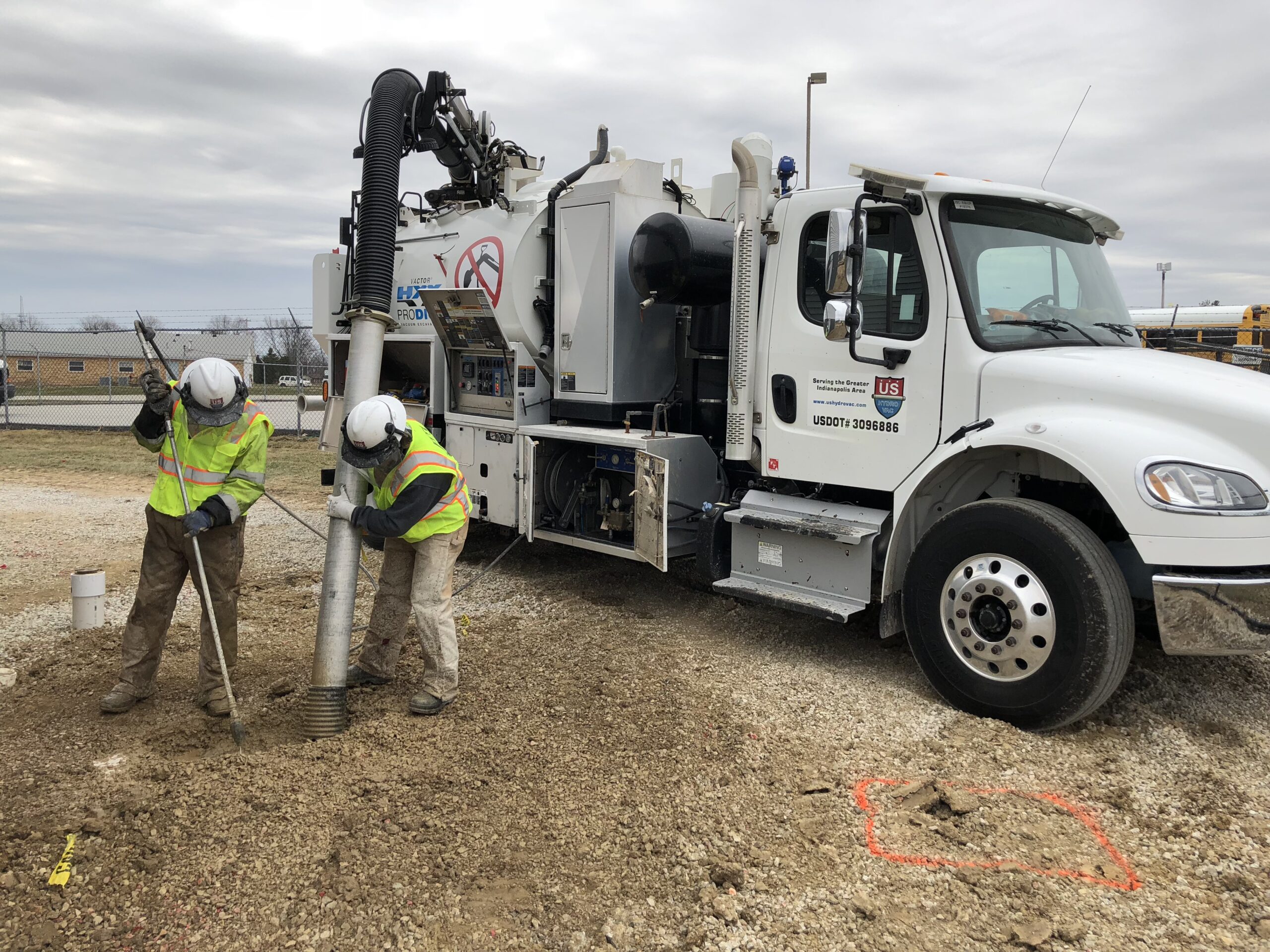
US Hydrovac’s earliest days: the crew and equipment that launched a company. (2018)
By the end of those first three months, the $100,000 was gone. KP borrowed well over $100,000 from Anjali’s parents—personal loans that took years to repay. Banks were out of the question. The couple survived on Anjali’s income; KP drew no salary. It was Anjali—armed with a finance background and a sharp instinct for cash management—who kept the numbers from spiraling out of control, tracking every dollar and making the difficult calls about what could be deferred and what had to be paid immediately.
The Math of Survival: Utilization as Destiny
KP’s first-year results were stark: the company lost money. With one to two units, the economics simply did not work. Revenue of $3,000–$5,000 per week from a truck running two to three days could not cover the fixed costs of rental, insurance, and labor.
But KP was studying the numbers obsessively. He discovered that three to five units could break even; beyond that, profitability became possible. The key metric was utilization: a truck working two days a week lost money; three to four days broke even; five days generated profit. Everything in the company’s strategy became oriented around keeping assets busy across multiple verticals—DOT and municipal projects, utility owners, general contractors, developers, mass earthwork companies, and industrial clients.
“I never wanted any single customer to represent more than ten percent of our business,” KP emphasized. “My competitor had over 50 percent of their work from one client. That looked risky to me. What if that relationship changes? What if someone new enters the market?” This philosophy of diversification became a guiding principle that insulated US Hydrovac from the volatility that has claimed many small contractors.
The Financial Architect: Anjali Panchal
If KP is the face and voice of US Hydrovac, then Anjali Panchal is the financial architecture that holds the enterprise together. KP himself puts it in unequivocal terms: “She’s realistically the one that made the business successful.” Her background is in finance—a world far removed from underground construction—but she brought something essential: the ability to translate entrepreneurial ambition into financial viability. From day one, Anjali served as CFO, building the accounting infrastructure, managing cash flow, and establishing the controls that kept the company alive through its most cash-starved years.
When no bank would speak to a startup without three years of profitable returns, it was Anjali who identified alternative lending channels—smaller institutions specializing in minority-owned and women-owned businesses. The terms were harsh, but those early loans enabled US Hydrovac to purchase its first truck in 2019, eliminating crippling rental costs. By 2020, enough financial history had accumulated that mainstream banks finally began reaching out—a turning point she calls the moment “the banking relationships really made a big difference.” She also drafted the company’s first operating agreement, took on management of multiple outside law firms, and navigated the complex financial mechanics of converting to a union shop.
Perhaps most critically, Anjali recognized that financial literacy is one of the most underestimated challenges facing small construction businesses. “Most small businesses can’t afford a finance person,” she observed. “Usually it’s just the owner trying to figure it out.” At US Hydrovac, every strategic decision—whether to rent or buy, when to add a division, how aggressively to pursue union status—was grounded in rigorous financial analysis. KP builds the relationships; Anjali builds the financial foundation on which those relationships can be sustained.

Anjali Panchal, CFO of US Hydrovac, the financial architect behind the company’s growth.
Building Year-Round Capability
By year three, KP faced a familiar construction dilemma: seasonal work meant his best people had nothing to do in winter. The solution was to launch a Pipeline Inspection and Cleaning Division (CCP). While hydrovac work slows with construction activity, stormwater and sanitary sewer maintenance is year-round. The new division kept field crews employed through the off-season and opened an entirely new revenue stream.
Today, CCP accounts for roughly 30 percent of the business, with hydrovac contributing 70 percent. KP described the two as fundamentally different: “Hydrovac is more of a commodity—it’s about price and quality. Pipeline inspection is value-driven. It requires expertise, and that’s where we differentiate.”
A Defining Project: Louisville MSD Broadway Street
In 2021, US Hydrovac received a call that would catalyze the company’s trajectory. A rehabilitation contractor working on the Louisville Metropolitan Sewer District’s Broadway Street project in downtown Louisville, Kentucky, needed jetting and pipeline inspection services on a century-old brick sewer that served multiple hospitals in the heart of the city. Shutting down the sewer was not an option. The project was extraordinarily difficult.
US Hydrovac started with one crew and one truck. Within weeks, the scope expanded to four crews with more than 12 people working six to seven days a week, often in 12-hour shifts—and sometimes around the clock with rotating crews. Much of the work had to be done manually: high-pressure water jets risked dislodging the deteriorating brickwork, so crews cleaned and televised the sewer by hand, in conditions where standard equipment could not reach.
The project lasted over eight months, performed under contract to Temple & Temple, with payment terms of 2-net-10 that supported US Hydrovac’s ability to hire and grow during the engagement. More importantly, the Broadway Street project demonstrated the company’s ability to perform at a level few competitors could match—and it directly enabled US Hydrovac’s transition to union signatory status, a decision that positioned the company for larger, more complex projects going forward.
Today, US Hydrovac is the only union-specialized subcontractor in the Midwest that performs specialty inspections such as laser profiling, live-line floating inspections using rafts, and robotic cutting inside pipes and structures.
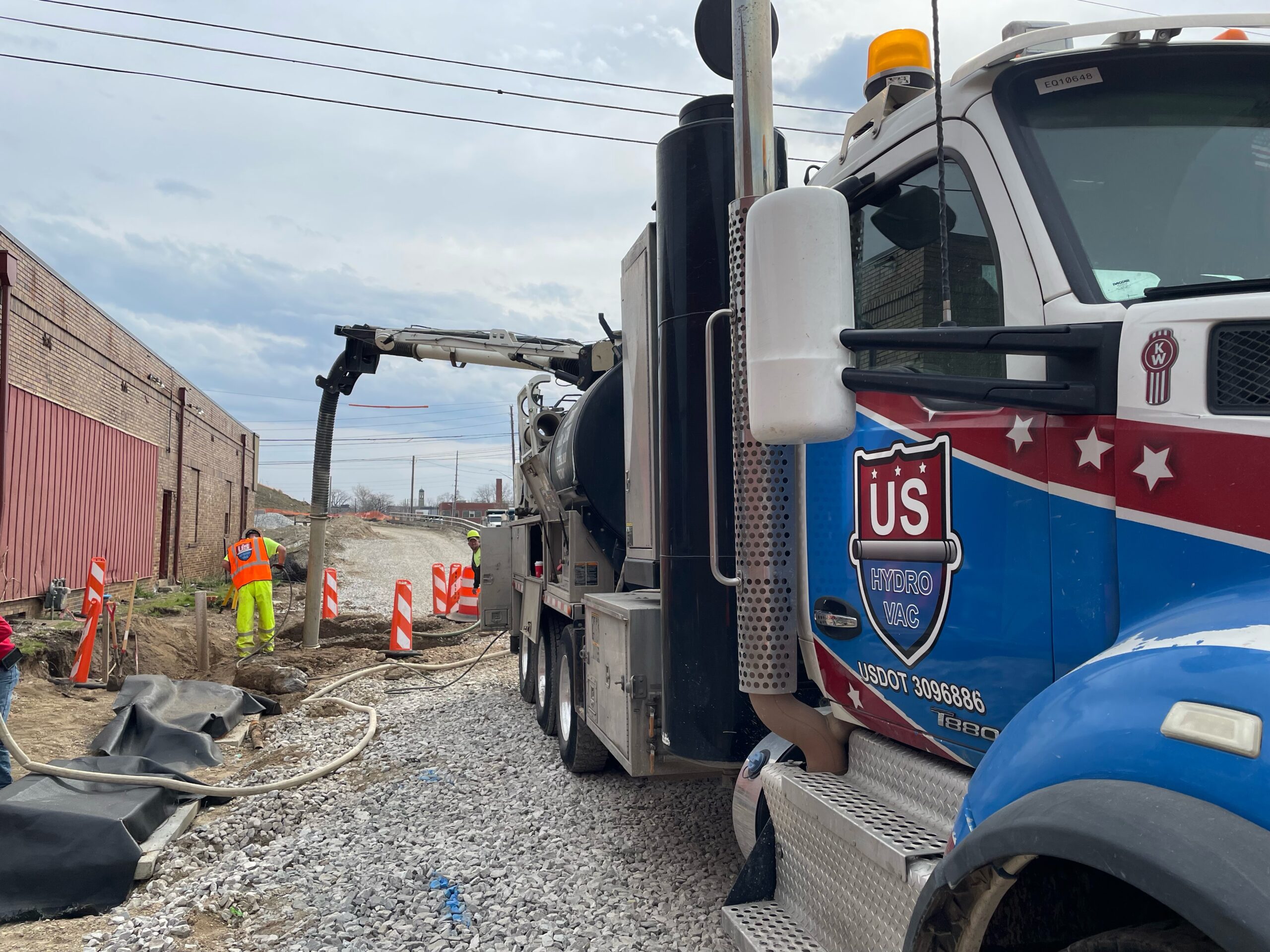
US Hydrovac’s pipe-cleaning (jet/vac) truck uses high-pressure water jetting and vacuum recovery to clean sewer pipelines.
Navigating the Union Transition
The decision to go union was forced by circumstance: US Hydrovac’s largest client, Miller Pipeline, came under union pressure and told KP, “We can’t use you anymore.” Going union meant labor costs rising roughly 25 percent, with substantial monthly payments calculated by the hour for every worker. The financial impact was severe—the company lost money for three consecutive years after the transition, as growth had outpaced operational controls. It was not until recently that US Hydrovac implemented rigorous KPI tracking and unit-level profitability analysis to regain its footing. “Every stage of business ownership has different challenges,” KP observed. “What you face as a startup is completely different from what you face at scale.”
The People Equation
Ask KP what he is most passionate about, and the answer is immediate: people. Not equipment, not contracts, not market share. People.
“My focus has always been on the people part of the business,” he stated, “The people that work for us and the people that support us—our customers—are what I am truly passionate about. Teaching and empowering my people are my main job, and that is what has allowed this company to grow beyond our expectations.”
The numbers bear this out. Over 75 percent of US Hydrovac’s employees are under 30. The average field worker’s salary is approximately $91,000—a figure that would surprise many in an industry where young workers are often underpaid and undervalued. The company actively recruits people with no prior utility experience, preferring to train from scratch rather than inherit what KP calls “past baggage” from other organizations.
“We had a 20-year-old kid who got his CDL through a high school program and was earning $100,000 by the time he turned 21,” KP shared. “When you give opportunities to people who might not get them at established companies, they remember. They talk about it. They tell their friends.”
KP’s philosophy on employee retention is decidedly non-transactional. “Money is just short-term relief,” he said. “What keeps people long-term is when they feel like part of a team, when they work with people they genuinely care about. Don’t just talk to your employees about work—get to know their personal lives, their families, what they enjoy. We’re all more similar than we think. If you find common ground, you can build a relationship. And that matters more than a paycheck.”
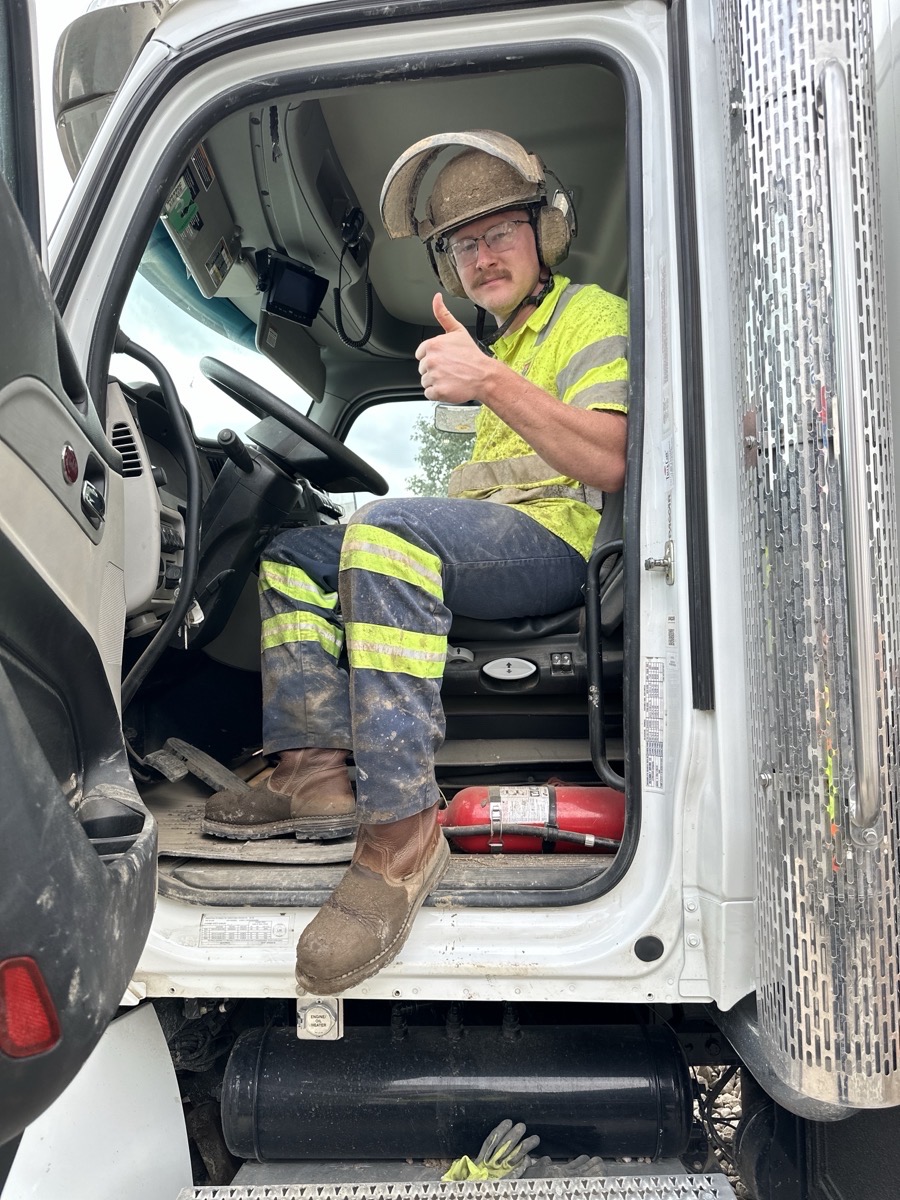
Featured is Chase Albers who has been with US Hydrovac for over 5 years and has seen the company’s growth over the years.
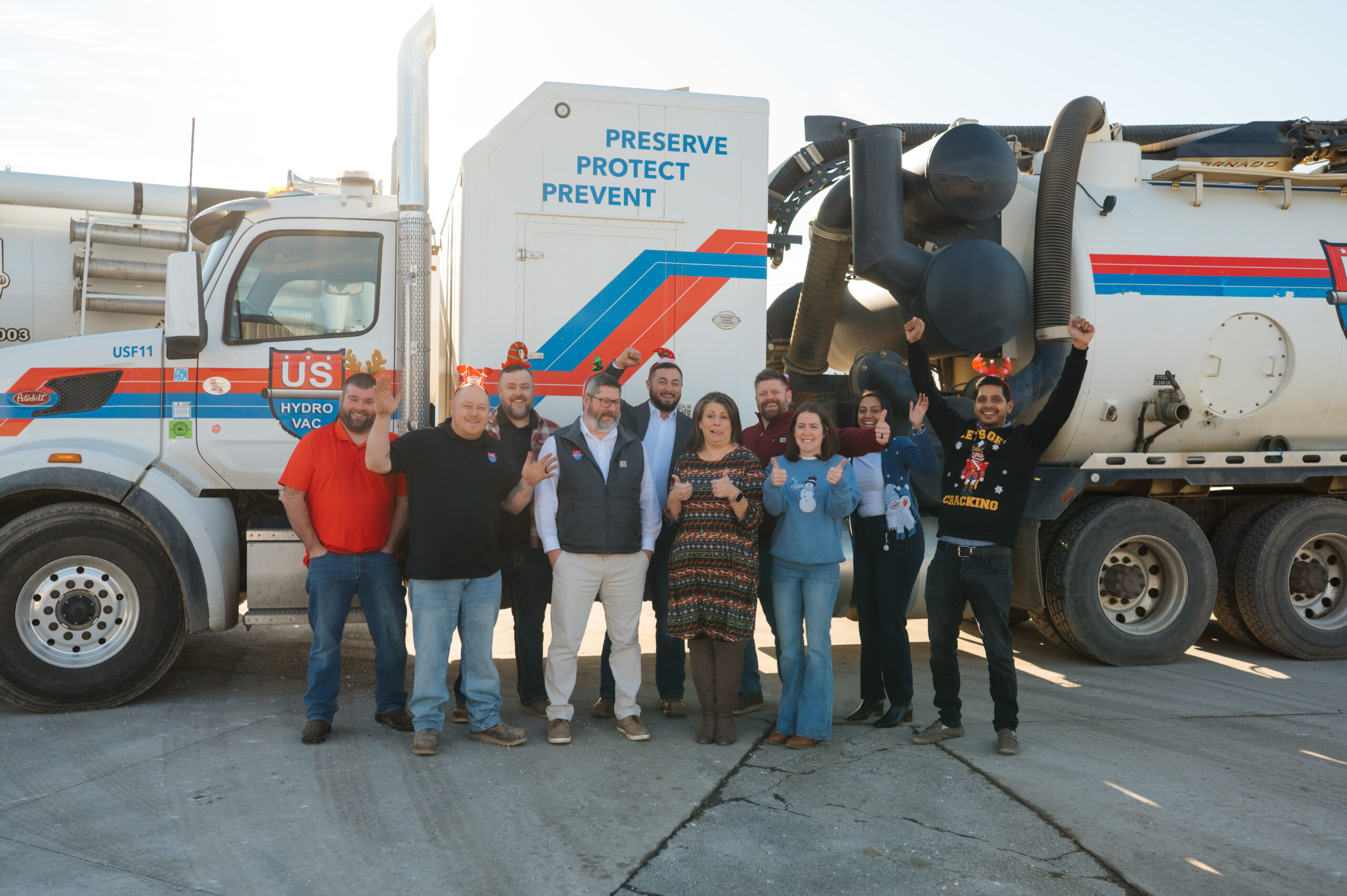
The US Hydrovac team.
Scaling Leadership
US Hydrovac has recently made several strategic leadership hires that signal the company’s transition from entrepreneurial startup to structured growth organization. Chris Lombardo has joined as Director of Operations, bringing over a decade of operations management and team development experience, with particular expertise in opening satellite branches. Jake Whitney, a six-year veteran of US Hydrovac who built the Pipeline Inspection and Cleaning Division from inception, has been promoted to Director of Client Strategy, serving as the primary point of contact for key clients on complex transportation and infrastructure projects.
The company has also brought on a contracted safety director, added human resources capacity, and is building out its administrative infrastructure. KP is candid about his own limitations in this evolution: “I’m good at motivating people. I’m not really good at managing them or having hard discussions. That’s why we have to put the right people in place.”
Underpinning all of these organizational changes is Anjali Panchal’s continued financial stewardship. As CFO, she now manages a significantly more complex financial operation than the one she built from scratch in 2018: union payroll obligations, multi-state tax compliance, equipment financing portfolios with individual truck payments approaching $10,000 per month, and legal relationships spanning multiple outside firms. Her ability to scale the financial infrastructure in lockstep with operational growth has been, in KP’s words, “the real secret sauce” of the company’s evolution. “I can go out and talk to people and make them use the company,” KP said during the Purdue lecture. “But the real secret sauce in every company is the person making everything happen—from implementing systems to standards, protocols, and expectations.” That person, unmistakably, is Anjali.
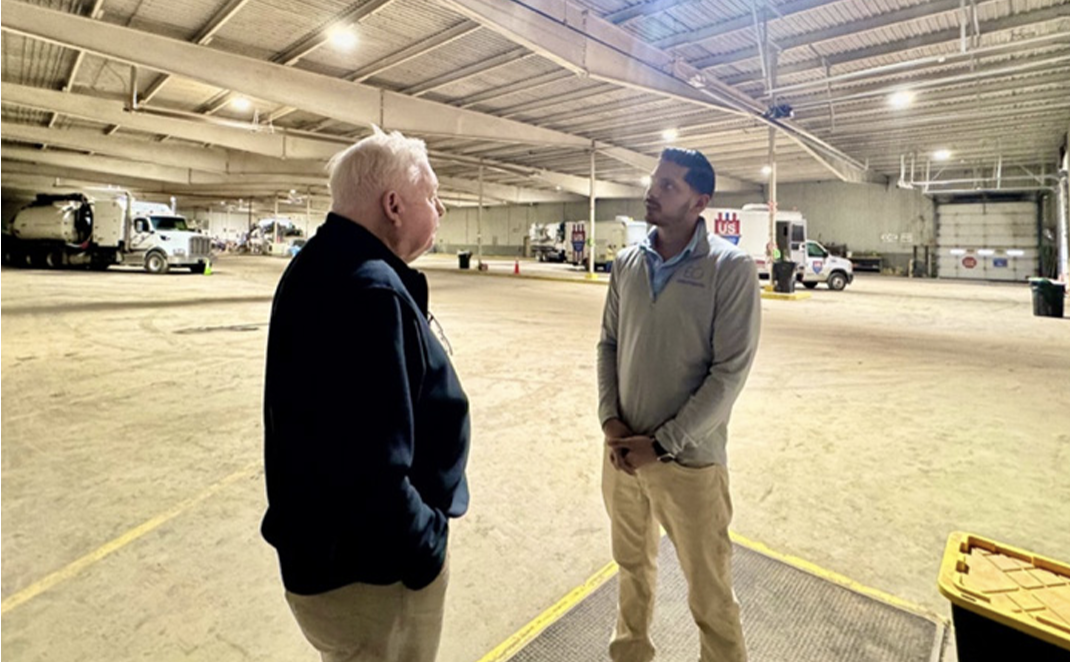
The BAMI-I team visiting US Hydrovac’s Indianapolis operations, where the company’s 15+ unit fleet is dispatched daily across the Midwest.
Looking Ahead: Innovation and Regional Growth
KP’s ambition is to build US Hydrovac into a dominant regional force in the Midwest’s water and wastewater infrastructure market. The company currently operates across Indiana, Ohio, and Kentucky, with plans to open its first satellite office in the coming year.
But geographic expansion is only part of the story. KP is equally passionate about bringing innovation to an industry he sees as stubbornly resistant to change. “All of my competitors are—honestly—a bunch of old, set-in-their-ways people,” he said bluntly. “I love innovation. I love looking at new things and figuring out how I can provide more value to my customers.”
US Hydrovac has already begun deploying AI-powered technology that provides clients with real-time visibility on their assets. The company’s capabilities range from cleaning 120-inch-plus brick sewers to performing complex interceptor inspections in challenging environments. KP’s vision is not to be the largest company in the market, but to be the most capable and most client-focused.
“If you can make your customer’s life even one percent easier, you probably have a customer,” KP told the Purdue students. “If you can figure out how to make their life five percent easier, you have a partner who will take you wherever they go.”
A US Hydrovac hydro excavation truck operates on a utility construction site, part of a growing fleet now exceeding 15 units.
A Message for the Next Generation
Near the end of his Purdue lecture,I asked KP: “If you could give just one piece of advice to students entering this industry, what would it be?”
KP’s response was simple and heartfelt: “Don’t be afraid to ask questions. Don’t be afraid to look dumb. Just learn. Learn from the people around you. When I was growing up, I didn’t ask questions because I thought, ‘What if I look stupid? Will the kids in the next class laugh at me?’ Being comfortable with discomfort is what makes you grow. We all like to stay in our comfort zone, but we don’t grow until we step outside of it. If what you’re doing doesn’t make you uncomfortable, you’re probably not challenging yourself enough.”
He paused, then added: “I only have one life. I might as well do as much as I can and maximize it.”
KP and Anjali Panchal sharing their entrepreneurial journey with graduate students in Purdue University’s Construction Business Management course, February 2026.
◆ ◆ ◆
KP Panchal’s story is not merely an entrepreneurial success narrative. It is a reminder that the underground infrastructure industry—an industry often perceived as slow-moving, tradition-bound, and resistant to new voices—has room for anyone with the courage to show up, the humility to learn, and the resilience to persist when the odds seem impossible. From a four-year-old immigrant cleaning motel rooms to the founder of a 48-person, multi-state underground utility company, KP’s journey—built alongside Anjali’s indispensable financial leadership—embodies the spirit of innovation and determination that BAMI-I seeks to champion.
We are proud to feature KP and Anjali Panchal and their team at US Hydrovac on our cover, and we look forward to watching this remarkable company’s next chapter unfold.
| COMPANY PROFILE: US Hydrovac Inc.
Founded: 2018, Indianapolis, Indiana Founder & Owner: KP Panchal CFO: Anjali Panchal Employees: 48 (12 office/management, 36 union field personnel) Fleet: 15+ units (hydrovac trucks, jet/vac trucks, camera vans) Markets Served: Indiana, Ohio, Kentucky (expanding) Core Services: Hydrovac excavation, pipeline inspection (CCTV, laser profiling, floating inspection), sewer cleaning, robotic cutting Client Segments: DOT/Municipalities, Utility Owners, General & Sub-Contractors, Infrastructure Contractors, Developers, Mass Earthwork, Industrial Services Union Status: Union signatory – only union-specialized subcontractor in the Midwest for specialty pipeline inspections Distinction: 75%+ of employees under age 30; average field worker salary ~$91,000 |