By Dan Hilyer, P.E.
Water and wastewater utilities serve a critical role in ensuring the delivery of safe and reliable services to their communities. However, they often face significant infrastructure challenges due to aging assets and the need for costly repairs and replacements. Historically, funding for first-generation infrastructure development was primarily in the form of home mortgages and business loans which paid the initial infrastructure cost with limited and relatively low one-time connection fees. This approach provided limited to no involvement from ratepayers. The long-term financial demands of water and wastewater utilities have proven this approach insufficient. In this article we will investigate the merits of utilizing asset management to better inform rate setting and capital planning.
Evolution of Infrastructure Funding
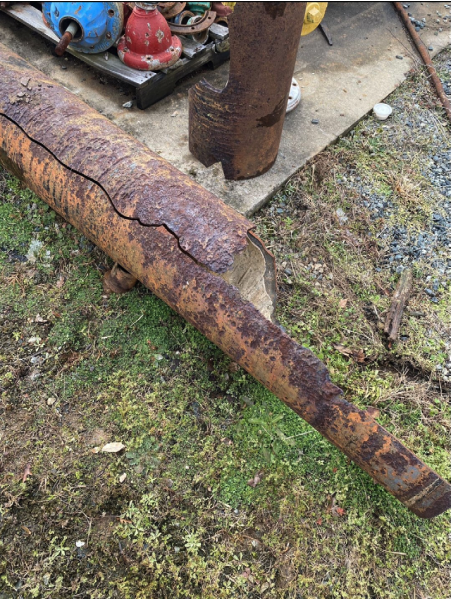
First-generation water and wastewater infrastructure relied heavily on funding through home mortgages and business loans which covered the initial infrastructure development cost. This approach removed infrastructure investment from rates paid by utility customers. Consequently, ratepayers were not required to shoulder the burden of funding the initial infrastructure installations. While this model is still in widespread use today, it presents many challenges and limitations for the utility. A key limitation is the absence of dedicated revenue streams for long-term infrastructure maintenance and replacement. This limitation impedes the utilities’ ability to adequately plan for future funding requirements and may result in deferred maintenance and higher costs for future generations.
Depreciation has been a commonly used method for funding infrastructure replacement. However, relying solely on depreciation has its limitations. Many systems fail to fully fund depreciation resulting in a shortfall of funds required to adequately address infrastructure needs. Even when fully funded, depreciation rarely provides needed funding levels to support the infrastructure replacement demands. Depreciation calculations are typically limited to the original costs of assets, disregarding the impact of inflation over time. This omission leads to a significant disparity between the actual cost of replacement and the available funds set aside through asset depreciation. To address this issue, utilities must adjust depreciation annually to account for inflation and ensure adequate funds are allocated for future capital needs. Failure to account for inflation will result in deferred maintenance and continued infrastructure deterioration, resulting in increased future costs that will land on the shoulders of the ratepayers. Unfortunately, general accounting standards do not allow for the possibility of adjusting depreciation for inflation.
Federal and state funding programs have been presented as the future of infrastructure replacement. While grants, appropriations, state revolving funds, and other government programs can provide short-term funding solutions and address new regulatory requirements, they have limitations when it comes to long-term sustainability. Although these programs can offer immediate financial relief, they are simply not generationally sustainable. There is no guarantee of the continued availability of these funds and access to these programs is not assured in the long term. Reliance on grants and similar programs can create uncertainty and instability in funding, forcing utilities to constantly seek alternative sources. This approach of “kicking the can down the road” burdens future generations with the responsibility of addressing infrastructure replacement needs without a reliable financial support mechanism.
Water & Wastewater Rates
The key to the long-term sustainability of water and wastewater utilities is the ability and willingness to develop rates that adequately address current and future infrastructure repair and replacement needs. Historically, utilities have developed rates that rely heavily on consumption-based charges. While these forms of rates are equitable across the customer base, they are based on assumptions that are entirely out of the control of the utility. Consumption-based rates depend on predicting on an annual basis the usage habits of the customer base being served while also considering forecasted weather patterns that can have a significant impact on how much water each customer uses.
Additionally, consumption-based rates depend on continued economic growth and do not account for any unexpected shrinkage caused by an economic downturn that forces commercial and industrial customers to close or reduce their water usage based on demand downturns. These assumptions make it a gamble to accurately project revenue. To overcome this challenge, rates need to capture capital funding requirements through a base rate structure. This approach removes the guesswork associated with consumption-based rates and provides a stable and predictable revenue stream.
Rates must also be sustainable and equitable, ensuring the burden of infrastructure funding is fairly distributed across the customer base. To achieve this, rates should be based on a well-defined Capital Improvement Plan that aligns funding needs with the anticipated infrastructure replacement requirements. By developing rates that address infrastructure funding, utilities can secure the financial resources required to maintain and upgrade their systems, ensuring sustainable service for future generations.
Need for Asset Management
Water and wastewater utilities must embrace asset management to address the limitations of traditional funding models. Asset management encompasses the systematic and strategic management of assets throughout their life cycle and provides utilities with valuable insights into asset data and condition assessments. By incorporating asset management data into the capital planning and rate-setting process, utilities can make informed decisions and accurately estimate the revenue required to fund infrastructure investments over time, ensuring that rates are equitable, sustainable, and reflect the true cost of providing reliable water and wastewater services.
Asset management plans rely on accurate asset data and comprehensive condition assessments to inform decision-making. Utilities gain a holistic view of their infrastructure by gathering and organizing detailed information about assets, such as location, age, condition, and maintenance history. This information allows for prioritizing investments based on risk and criticality. It helps identify assets that necessitate immediate attention, ensuring that resources are allocated efficiently to address potential failures or service disruptions.
Asset management plays a crucial role in strategic and capital planning. Utilities can proactively develop long-term plans to address infrastructure needs by analyzing asset information and condition assessments. These plans consider factors such as asset life expectancy, regulatory requirements, technological advancements, and economic development. With this data, utilities can prioritize investments and allocate funds appropriately, ensuring that infrastructure replacement aligns with the utility’s long-term goals and financial capabilities.
Asset management contributes to enhanced customer confidence and satisfaction. By prioritizing investments in critical assets, utilities can prevent unexpected service disruptions, minimizing the inconvenience to customers. Reliable service promotes trust and satisfaction among ratepayers and enhances their confidence in the utility’s ability to meet their water and wastewater needs. Asset management also enables utilities to communicate transparently with their customers about infrastructure investments, emphasizing the importance of rate structures that reflect the true cost of service.
Implementing an asset management plan provides utilities with defensible funding requirements. By analyzing asset data, condition assessments, risks, and criticality, utilities can articulate their long-term funding needs based on objective criteria, not subjective opinions. This transparency ensures accountability to stakeholders, including ratepayers, policymakers, regulatory agencies, and lending institutions. Defensible funding priorities assist utilities in securing required financial resources and help build trust with stakeholders who rely on the utility’s services.
Focusing on infrastructure needs, including first and second-generation assets, plays a vital role in the utility’s long-term sustainability. Asset management helps utilities maintain this focus. By continuously monitoring asset conditions and assessing their performance, utilities can proactively plan for future capital expenditures. This proactive approach limits the risk of deferring critical maintenance which will result in costly repairs and premature asset failures. Furthermore, asset management removes personal and recency bias from the decision-making process, ensuring investments are made on objective data and risk analysis.
Industry Certification Notice: Understanding NASSCO’s unique and consistent PACP™ coding language to identify underground conditions gives you the upper hand. Elevate your career with PACP Certification and help manage assets through the proper assessment of sewer pipes, laterals, and manholes. NASSCO-PACP™ CERTIFICATION Down Here, It Pays To Stay On Top. Rise to the Top: Get Certified at NASSCOTrainingSource.org | nassco.org
Asset Management at Work
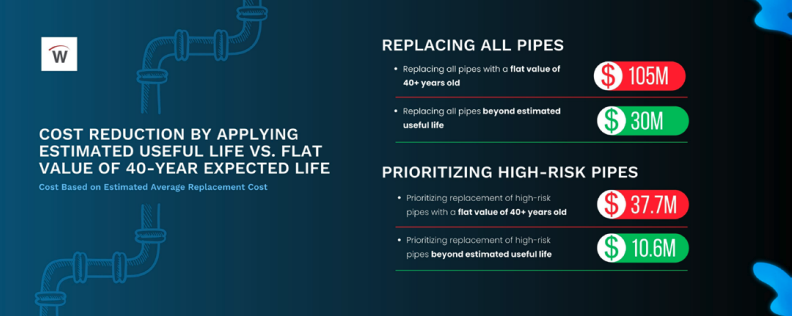
To illustrate the effectiveness of an asset management program, let’s consider an example involving the Environmental Protection Agency’s (EPA) life cycle standards. EPA applies as a basis for replacing assets their age only and does not consider other factors such as criticality and risk that play crucial roles in determining replacement priority. Using EPA’s standards for infrastructure life expectancy, a utility in the southeastern United States identified a $105 million, 25-year infrastructure problem.
Utilizing asset age as the only criterion created an unreasonable and unsurmountable problem. By implementing an asset management approach, which uses asset condition, consequence of failure, and probability of failure, assets that present unacceptable risk can be prioritized for replacement. Using this approach, the utility was able to significantly reduce the problem to a $10 million, 10-year issue.
The $105 million problem did not simply disappear – the reduction was achieved by refocusing attention and resources on critical and high-risk assets identified by using the asset management approach and applying estimated useful life metrics versus a flat, 40-year expected life. This approach allowed the utility to develop a plan with manageable steps to address their funding needs.
The utility’s asset management plan provided the required data and insights to prioritize investments, resulting in more efficient use of resources and improved long-term financial sustainability. In the three years since its inception, the asset management plan has played a pivotal role in providing valuable direction for infrastructure investment. This strategic approach allowed the utility to embark on the monumental task of addressing the critical needs of the system, resulting in a positive impact on the utility’s ability to develop a sustainable and well-funded capital improvement program for the long term. By incorporating the insights and guidance provided by the asset management plan, the utility has been able to confidently allocate resources, prioritize investments, and ensure the ongoing reliability and efficiency of its water infrastructure.
Conclusion
Incorporating asset management in water and wastewater utilities is crucial for informed capital planning and rate development. Asset management provides utilities with defensible funding requirements and ensures transparency and accountability to stakeholders, including ratepayers, policymakers, regulatory agencies, and lending institutions. It enables utilities to maintain focus on infrastructure needs, including first and second-generation infrastructure. Leveraging asset management can help utilities develop a comprehensive rate roadmap that removes guesswork and bias, directing available funds where they are most needed. Ultimately, this approach ensures the long-term sustainability and resilience of water and wastewater infrastructure, benefiting the utilities and the communities they serve.
Dan Hilyer is the Utility Management & Operations Discipline Manager at Waggoner.